


In an era of unprecedented global migration and shifting policy landscapes, Boston College's Lynch School of Education and Human Development convened faculty researchers for a colloquium exploring immigration and immigrant communities through diverse perspectives.
The faculty experts' showcased work serves as a platform to demonstrate the intersecting areas of research at the school, generating new knowledge and bridging the gap between national challenges and the personal experiences that inform their research.
The event, organized by Associate Professor Usha Tummala-Narra and Associate Dean of Faculty & Academic Affairs and Golden Eagle Foundation Faculty Research Fellow Ana Martínez-Alemán, brought together experts in linguistic anthropology, law and policy, and educational leadership to discuss their research and methodological innovations.
The colloquium featured presentations from Dean Stanton Wortham, Associate Professor Raquel Muñiz, and Associate Professor Rebecca Lowenhaupt, each offering distinct approaches to understanding immigrant experiences in educational contexts.
"Immigration research has never been more crucial. Today's educational institutions stand at the intersection of demographic transformation and political change. We serve as critical sites where immigrant students and their families navigate complex systems, build new identities, and pursue educational equity.”
—Ana Martínez-Alemán
Associate Dean, Faculty & Academic Affairs
Golden Eagle Foundation Faculty Research Fellow
Capturing the Tacit Through Film
Dean Wortham, a linguistic anthropologist and educational ethnographer, challenged conventional research methodology by leveraging film as a powerful tool for capturing dimensions of human experience often missed by traditional academic writing. He argued that film's ability to evoke emotion and convey the subtleties of human interaction makes it a compelling medium for sharing the lived experiences of immigrant communities.
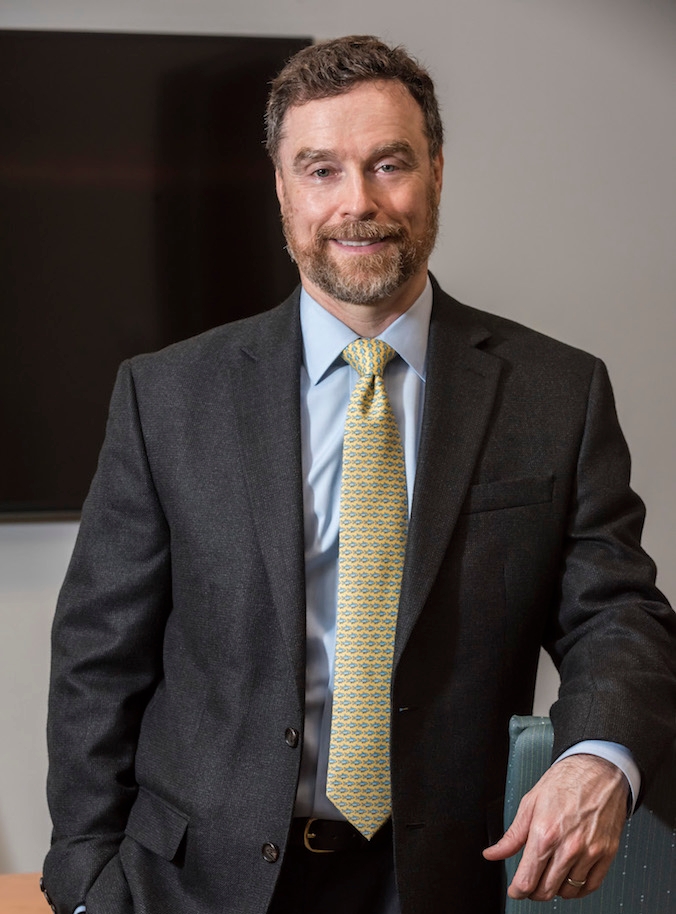
Stanton Wortham
Drawing from his decade-long ethnographic study of Norristown, Pennsylvania, Wortham screened a short documentary about Roberto and Arminda, Mexican immigrants who operated a restaurant dedicated to their deceased daughter, Mimi. The film's intimate portrayal of the couple's struggles and resilience in the face of personal tragedy and financial pressures exemplified the power of visual storytelling to create empathy and understanding.
"Most of human organization, most of human activity, is actually much more tacit," Wortham explained. "There's a level of tacit behavior that we all engage in, and that level is where you get a sense of who other people are and what they do in the world."
By capturing these unspoken dimensions of human experience, Wortham explained, film can provide a unique—more holistic and emotionally resonant—understanding of immigrant lives. "No form of presenting academic research is neutral," he noted. "They all embed assumptions about who we are." This deeper understanding, in turn, can inform and enrich immigration research by grounding abstract theories and data within the concrete realities of individual stories.
Legal Systems and Research Use
In her presentation, Muñiz focused on legal actors—judges, lawyers, and policymakers—and their role in shaping outcomes for immigrant communities. Her research examines:

Raquel Muñiz
"One of the challenges is that there's not a lot of empirical research on lawyers, especially in education," Muñiz said. She has expanded her methodological approach to incorporate social network analysis, organizational theory, and research on policy use.
She stresses how the current political climate has created significant challenges. Access to data has become increasingly restricted as lawyers protect their immigrant clients—many of whom are minors. "After the change in administration, that kind of access is no longer possible, " she explained.
In response to challenges, Muñiz is innovating with alternative data collection methods, including broader surveys, video elicitation techniques, and new dissemination formats such as policy briefs and infographics designed to reach diverse audiences.
By adapting her research strategies to the current constraints, Muñiz is working to ensure that critical insights on the legal dimensions of immigration can continue to inform policy and practice, even in a complex political environment.
Educational Leadership Today
In her presentation, Lowenhaupt addressed the shifting responsibilities of educational leaders as they navigate an increasingly precarious landscape for immigrant students and families. Her research has long focused on how leaders create safe spaces and promote belonging for immigrant communities.

"I have felt secure knowing that my research is focused on those who are supporting them, and not the students themselves," Lowenhaupt said. That sense of security has eroded dramatically. Schools, once considered neutral zones where immigration enforcement could not enter, are no longer protected under current federal policies.
"That priority to assure students and families that when you come in our [school’s] doors you're safe has really shifted, because there's an ethical obligation to say, in fact, we can't assure that you're safe," she explained.
This new reality raises questions for researchers. Lowenhaupt now worries not only about immigrant communities but also about educational leaders who actively advocate for students and may face job loss or increased scrutiny.
Despite these challenges, Lowenhaupt remains committed to partnerships with practitioners. "Now might be a good time to ask them, 'What can we do for you? What do you need to know given this new context, and how can we support you?'"
Collective Inquiry and Action
Following the presentations, attendees broke into small groups to discuss how research methods affect participants and what steps researchers should take in light of current political and social challenges.
"Today's presentations mark an important step in breaking the isolation of these experiences," Tummala Narra shared, "and move us towards a shared, nuanced understanding of immigrant experiences." As researchers face new limitations and ethical concerns, the colloquium highlighted the importance of working together across disciplines and finding innovative ways to support immigrant communities in a time of uncertainty.
To learn more about the impactful research presented by Stanton Wortham, Raquel Muñiz, and Rebecca Lowenhaupt, watch the full Faculty Research Colloquium on YouTube. Dive deeper into their findings and explore how the Boston College Lynch School is addressing critical societal challenges through innovative scholarship.