BCSSW doctoral student says ‘we have to believe in peace’
That’s the conviction driving the work of María Alejandra Gutiérrez-Torres, who is developing an intervention to help young girls recruited by armed groups rebuild their lives after war.
Our fully funded PhD program prepares the next generation of scholars, researchers, and educators to advance social work and social welfare.
Through close faculty mentorship, interdisciplinary collaboration, and a commitment to social justice, you'll develop the knowledge, research expertise, and leadership to create meaningful, lasting change.
In this section: PhD Community | Graduate Research Symposium | How to Apply: PhD
BCSSW students meeting with Christopher Salas-Wright, assistant dean of the doctoral program
Years to complete the PhD program
PhD students at BCSSW—a close cohort with individual faculty mentorship
Countries of citizenship throughout Greater Boston, the United States, and countries across the globe
Mean publications per doctoral student, per year
Students develop mastery across six disciplines of scholarship:
A substantive area
The foundation for advanced social work research in your chosen field.
Research methods
Building knowledge to excel as researchers and teachers at leading institutions worldwide.
Theoretical perspectives
Insight into social issues, social welfare, and social work practice.
Teaching methods
Actively engaging the next generation of scholars and practitioners.
Intervention research
Identifying causes, dynamics, and outcomes of practice and interventions.
Communication skills
Raising awareness of social issues and disseminating your scholarship.
Applicants are fully funded with a doctoral fellowship valued at more than $250,000 over the course of four years, including tuition remission, health insurance, professional development support, and an annual stipend.
Mentorship
Incoming students are matched with faculty members who share their research interests, providing support in research, career preparation, and beyond—throughout the doctoral journey.
Research Opportunities
PhD students benefit from funded conference travel and opportunities for academic publishing. Students have been awarded prestigious research funding, including from the National Institutes of Health and leading private foundations.
Teaching skills
Required teaching courses, practicums, paid teaching assistantships, and adjunct opportunities—plus BC's Apprenticeship in College Teaching through the Center for Teaching Excellence.
The annual symposium provides graduate students from across the University with an opportunity to present their empirical research to the BC community through oral and poster presentations.
Presentations represent a range of research methods, including qualitative, quantitative, and mixed methods. All presentations are selected through a faculty review process that evaluates the quality and appropriateness of submitted conference proposals.
The full-time PhD in Social Work program typically takes four years. Each student is assigned a faculty mentor with similar research interests. Students spend two years gaining research skills, then two years conducting independent scholarly research.
| FIRST YEAR | ||||||
|---|---|---|---|---|---|---|
| Fall | CR | Spring | CR | Summer | CR | Requirements Completed |
SCWK9951 Survey of Research Methods in Social and Behavioral Science | 3 | SCWK9956 The Dialectics of Social & Behavioral Theory | 3 | Optional: Elective | 3 |
|
SCWK9950 Professional Development Seminar | 3 | SCWK9960 Regression Analysis for Social and Behavioral Sciences | 3 | |||
SCWK9964 Intro to Statistics | 3 | Elective | 3 | |||
SCWK9993 Research Internship | 1 | SCWK9993 Research Internship | 1 | |||
| SECOND YEAR | ||||||
|---|---|---|---|---|---|---|
| Fall | CR | Spring | CR | Summer | CR | Requirements Completed |
| SCWK9992 Theories & Methods of Teaching in Professional Education (must be taken with SCWK9991) | 3 | Elective | 3 |
| ||
| Elective | 3 | Elective | 3 | |||
| Elective | 3 | CWK9981 Area Statement | 0 | |||
| SCWK9991 Doctoral Teaching Practicum (must be taken with SCWK9992) | 1 | SCWK9993 Research Internship | 1 | |||
| SCWK9993 Research Internship | 1 | |||||
| THIRD YEAR | ||||||
|---|---|---|---|---|---|---|
| Fall | CR | Spring | CR | Summer | CR | Requirements Completed |
SCWK9994 Dissertation Preparation Seminar | 3 | SCWK9995 Dissertation Direction I | 3 |
| ||
Elective | 3 | Optional: Audit course needed for dissertation | 1.5 | |||
SCWK9991 Doctoral Teaching Practicum* | 1 |
| ||||
*SCWK9991 Doctoral Teaching Practicum in year three will be assigned either in the fall or the spring.
| FOURTH YEAR | ||||||
|---|---|---|---|---|---|---|
| Fall | CR | Spring | CR | Summer | CR | Requirements Completed |
SCWK9996 Dissertation Direction II | 3 | SCWK9911 Doctoral Continuation | 1 |
| ||
Management of dissertations at Boston College is online-only. The public dissemination of research fits with University social justice values supporting global access to scholarship. The University policy with regard to dissertations is as follows:
All final dissertations must be submitted and published online through ProQuest/UMI, as well as BC’s open access institutional repository, by the University required deadline.
The ProQuest ETD Administrator system is used for student submission, school administration approval, and library management of the process, as it is at the vast majority of Carnegie Tier 1 schools. BC also supports an institutional repository (IR) as its system of record, in which we are legally obligated to preserve all dissertations, and where materials are made available Open Access online according to Creative Commons licensing of the student’s choosing. For both repositories, embargoes may be placed for up to two years. Embargoes can be extended up to five years with school approval. Each system carries its own set of licenses, terms and options (e.g. ProQuest license, BC IR license.)
Exceptions to the requirement to submit digitally will be based on decisions made by individual schools or by the Provost. BC Libraries provide support, instruction, and infrastructure to enable the collection, approval, description, security, access, and preservation of all Boston College dissertations and theses.

As the program’s director, I am fortunate to work alongside our outstanding faculty and staff at this remarkable University. Together, we are committed to preparing our students to conduct rigorous research focused on today’s most pressing challenges and to contribute to the formation of the next generation of social work researchers, educators, and innovators.
Consistent with Boston College’s academic and societal mission, we distinguish ourselves by balancing a dedicated commitment to academic excellence with a deep concern for the well-being of our students and the communities we serve. Our approach is designed to do more than build scholars; it creates a welcoming and supportive environment where you can develop academically and as independent thinkers, in addition to cura personalis, or care for the whole person.
Ultimately, our goal is to help students grow intellectually as scholars and educators, develop as professionals of integrity and competence, and discern how they can best use their gifts to address complex social problems through their scholarship and professional contributions. Our doctoral students are extraordinarily talented, hardworking, and highly motivated to make a positive impact in communities here in Massachusetts and across the globe—come see for yourself!
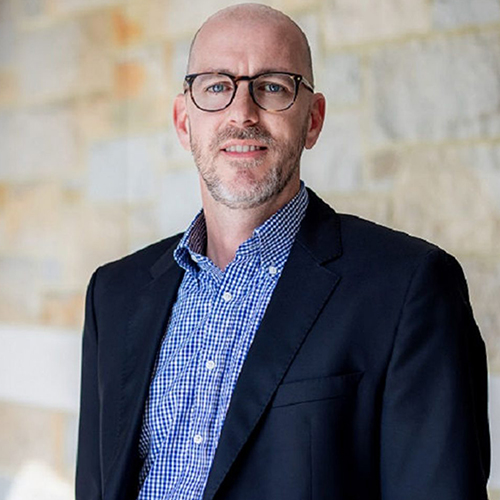
Christopher Salas-Wright
Assistant Dean, PhD Program
Our graduates pursue careers as faculty, researchers, policymakers, and leaders.
Arizona State University
Boston University
Brown University
Dartmouth
Harvard
University of Texas at Arlington
University of Pittsburgh
Massachusetts Institute of Technology (MIT)
Boston Children’s Hospital
University of Hawaii
University of Oklahoma
The Ohio State University
Every admitted PhD student receives a doctoral fellowship valued at more than $250,000 over four years. Applications close December 1.