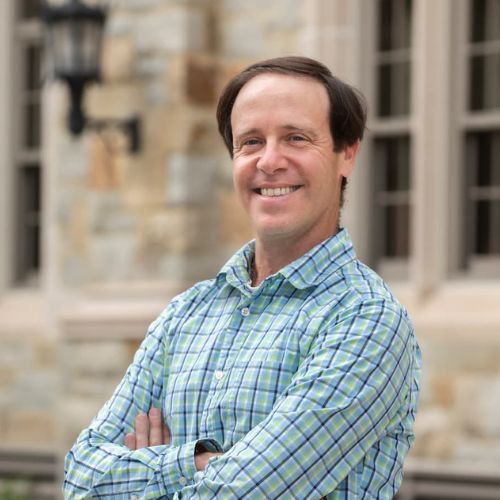


The newest cohort of Carroll School faculty members have landed on the Heights. Their backgrounds and work experience are diverse, with wide-ranging research on topics such as how people decide to repay debt, how reactions to emotions impact team dynamics in the workplace, and how corporate messaging aligns with, or diverges from, broader media narratives surrounding those companies. But what do all six of these professors have in common? They’re all esteemed scholars eager to share their expertise, insights, and advice with the next generation of business leaders.

Justin Katz
Assistant Professor, Seidner Department of Finance
Ph.D., Harvard University
BA, Yale University
What drew you to your current area of study?
I study household finance—how consumers reason about their financial circumstances and make consumption, investment, and borrowing choices. What makes it so interesting is that many of the financial decisions people face every day are both enormously important to their lives and genuinely hard to reason about from first principles. How much student debt to take on? How to balance saving and spending? Whether to rent or own their home? It leaves a lot of room both to understand what people are actually doing and find ways to help them decide better.
What will be on your research agenda this year?
My research focuses on how people decide to repay debt, and on how those decisions shape equilibrium outcomes in credit and asset markets more broadly. One current project studies the effect of "mortgage rate lock" on housing markets: the reluctance of borrowers holding below-market, fixed-rate mortgages to sell once rates rise. Another examines how borrowers used the extra funds freed up by the student loan forbearance enacted as part of the 2020 Covid-19 relief legislation.
How would you describe your teaching philosophy?
Theory is one of the highest-value things students can learn in a classroom because it gives them a framework for thinking through a wide range of situations and environments. That's useful both for understanding what has already happened and for reasoning about circumstances no one has encountered before.
So my goal as a teacher is to ground discussions in theory and give students clear guidance on how to apply its insights to novel problems. It's a great shortcut to reasoning your way through applied situations, and it's hard to pick up outside a classroom setting.
What are some of your favorite things about living in Boston?
I've lived in the Boston area since graduating from college. The river and coastline are some of the great joys of living in Boston, and I love sailing and running along the Charles and Boston Harbor. I've lived in Beacon Hill for the past two years and it's beautiful. It's so close to the Esplanade and public garden, and it has the feeling of a small town embedded in a big city.

Christina Bradley
Assistant Professor, Management and Organization Department
Ph.D., University of Michigan
BS, Yale University
What drew you to your current area of study?
A central interest of mine is how teams can engage with emotions to work together more effectively. So much of what makes collaboration hard, and what makes it rewarding, comes down to how we navigate emotions with one another. I wanted to understand that more deeply.
With my current research, I’m excited to keep exploring two connected questions. The first is how people can respond well to the emotions of others, especially in high-pressure situations where those responses matter most. The second is how people can express their own emotions in ways that help others make sense of what they are feeling.
What will be on your research agenda this year?
In one of my papers, just accepted at Organization Science, we find that acknowledging others' emotions during internal team conflicts can help reduce the intensity of negative emotional expression, ultimately helping team conflict resolution. Other contexts where I’m interested in exploring these concepts include high-pressure team environments. I’ve looked at how teams work through a crisis or other high-stakes situations, like those involving medical professionals in operating rooms.
What is something your students might be interested to know about your professional background?
Before I began my Ph.D., I helped create a curriculum to teach social and emotional intelligence in schools from pre-K through college through the Contentment Foundation, where I also trained teachers to bring these skills into their classrooms. Then I researched the effectiveness of a different social and emotional learning curriculum for the Yale Center for Emotional Intelligence. This work took me around the world—to Bhutan, Indonesia, Italy, and other places—and shaped how I think about emotional skills as something we can all learn and develop.
I feel like it also helped me understand how much people's assumptions and ways of learning can differ depending on the culture they come from. That has stayed with me in the classroom and helped deepen my curiosity about my students and where they may be coming from, rather than assuming everyone arrives with the same background or needs.
What has been your favorite place you've ever lived?
When I was in Italy researching emotional intelligence and training teachers, I lived in Florence. I loved trying local food, especially the homemade pastas, and learning more about the history of the city. It was also a meaningful time for me personally, a chance to connect with my ancestors' culture, as I’m half-Italian and a dual Italian-US citizen. Now, I’m really looking forward to exploring Boston, trying new restaurants, attending sporting events, and getting out into nature.

Bryce McLaughlin
Assistant Professor, Business Analytics Department
Ph.D., Stanford University
BS, Harvey Mudd College
What drew you to your current area of study?
Early in my Ph.D., I read about criminal risk assessments, which are commonly used during bail hearings and sentencing in the US. Despite showing great promise based on the analysis of existing data, there has been no evidence that these tools will increase public safety or accurately predict whether someone will relapse into criminal behavior, though they have a massive impact on the lives of the individuals they evaluate.
I realized that algorithms that assist human decision makers cannot positively do so without incorporating knowledge about how those decision makers operate. To take one example, recent research has shown that a court official seeing an out-of-state address can lead to excessive detention of an offender, despite the address carrying no additional flight risk. Data is required on how those decision makers make their decisions, not just the problems they attempt to solve.
What will be on your research agenda this year?
I'll be finalizing a series of methodologies that address how decision data of that kind can be used to improve human decision-maker performance, basically by strategically tuning the algorithms they use for making recommendations.
What is something your students might be interested to know about your professional background?
I was planning on pursuing a research career in pure mathematics. But then, as an undergrad, I began teaching math classes at the California Institution for Women, a state prison, through the Prison Education Project. The experience helped me appreciate the level of support I've been offered throughout my life and convinced me I should pursue projects with tangible benefits to society. As a result, I chose to pursue a Ph.D. via a business school so I could learn how to model real-world problems and use my skills to create positive change.
If you could give one piece of advice to a current management student, what would it be?
If you're passionate enough about a problem that it keeps you up at night, you've found your calling and you should never let it go. However, you should definitely find a way to put it out of your mind when it's time to go to bed. Sleep is very important.

Kaushik Vasudevan
Assistant Professor, Seidner Department of Finance
Ph.D., Yale University
BA, University of Chicago
What drew you to your current area of study?
I studied statistics and economics as an undergraduate and then spent three years doing research and portfolio management at AQR Capital Management before graduate school. All of that led me to questions about the models investors, policymakers, and financial institutions use, and how those models shape behavior and market outcomes.
What will be on your research agenda this year?
One project analyzes how Federal Reserve policymakers with different models of the macroeconomy make decisions as a committee. Another examines how specialized financial models shape the trading activities of banks. I'm also working on new ways to use text, market data, and Al tools to capture previously difficult-to-measure aspects of beliefs and information transmission.
If you could give one piece of advice to a current management student, what would it be?
Focus on understanding intuition, not just memorizing mechanics. The specific tools you use in your studies or work will change, but being able to ask a good question, explain why something should be true, and figure out what evidence would change your mind travels across almost any career.
I care a lot about mentoring students and building an intellectual community around research. Some of the most interesting ideas come from conversations with people who approach a question from a very different perspective, so I’m always happy to talk with students and colleagues about what they’re working on.
Do your interests outside of academia ever influence your research?
I like staying active outdoors, especially cycling and playing soccer. I spent several years helping teach a Sports Analytics course at Yale, which was a particularly fun way to combine an interest in sports with quantitative thinking. It also got me thinking about how betting markets can be used to study broader questions in finance, particularly how the beliefs and preferences of consumers and other market participants are reflected in prices.
That led to “Betting Without Beta,” a paper I coauthored that used sports betting data to demonstrate how a preference for lottery-like payoffs, rather than inaccurate beliefs about game outcomes, drive the lower returns when betting on risky underdogs versus safe favorites. This line of research has led to ongoing work using prediction-market data, which allows us to study the same basic questions in a broader setting and examine how information and expertise are incorporated into prices.

Robert Smith
Professor of the Practice, Business Analytics Department
Ph.D., Florida State University
MS, Mississippi State University
BS, Louisiana State University
What drew you to your current area of study?
I love solving problems. I teach data science and analytics, so my entire background is designed around using data to solve problems. The first grant project I ever worked on involved using data from pilot training simulations to optimize cockpit control panels in such a way that they minimize cognitive overload when pilots are under duress. I like this example because I have absolutely no experience in aviation but was (hopefully) useful to the team due to my data science background.
Almost all of my academic work involves analyzing data to explain some phenomenon. The project I’m currently working on explores how foreign language cues are used in branding to convey quality. That could be an olive oil brand using Italian words in its labeling. In the project, I’m disentangling how much this could cause the intended effect versus cognitive friction leading customers to select a different brand.
When you encounter a new problem that may need solving, what is your thought process like?
Not to oversimplify, but I basically spend all day thinking about the interesting things I see around me. When I see something that particularly piques my curiosity, I start wondering if and how I could track down data to explore the topic. If I think I can find data, I then start wondering who might find value in exploring an answer to my question.
How would you describe your teaching philosophy?
My teaching philosophy is grounded in the belief that students learn best when they feel that they belong, the material is accessible to them, and that they are active participants in the learning process. Drawing on my own experience as a first-generation college student, I try to recognize the uncertainty and intimidation that students may feel when navigating unfamiliar subjects or academic expectations.
After previously teaching at Suffolk University for 13 years, what are some of your favorite things to enjoy in the Boston area?
My favorite restaurant is Brassica in Jamaica Plain. Ask for "The Ride" tasting menu, then sit back and enjoy. I also love Wally's Jazz Club in the South End for live music, Goof's in Somerville for comedy and cheap pulled pork sandwiches, and catching minor league baseball games in Lowell.

Abhishek (Abhi) Ganguly
Visiting Assistant Professor, Seidner Department of Finance
Ph.D., Indiana University
MBA, University of Pittsburgh
What drew you to your current area of study?
My years working in corporate consulting and as a private equity associate before moving into academia really drove my research focus. Seeing the mechanics of deals, management decisions, and firm structures up close pushed me toward studying empirical corporate finance, particularly corporate governance, shareholder activism, and private equity structures.
What will be on your research agenda this year?
I have a few key areas of focus this year. I’m continuing my research into private equity structures, looking more deeply into how those frameworks influence firm behavior and governance. I’m also diving further into corporate disclosure strategies and behavioral finance.
A major priority right now is constructing and refining a Disclosure-Media Disagreement Index to analyze how corporate messaging aligns with, or diverges from, the broader media narratives surrounding those specific companies. The goal is to capture discrepancies between what a firm's management signals through its corporate disclosures and how the financial press independently reports on or interprets that firm's actions.
How would you describe your teaching philosophy?
My teaching philosophy centers on bridging the gap between rigorous academic theory and real-world financial practice. Drawing on my industry experience, I enjoy walking students through the complexities of leveraged buyouts and venture capital term sheets.
By analyzing real-world cases and actual term sheets, students gain a practical understanding of how capital is negotiated, deployed, and managed in the private markets. My goal is to transition students from being passive consumers of financial theory to technically proficient decision makers.
What are you looking forward to about teaching at Boston College?
The Seidner Department of Finance has cultivated an incredibly collaborative and collegial environment. Faculty routinely support one another by observing classes, sharing teaching resources, and offering constructive feedback. I value this culture of mutual support and open dialogue—it promotes continuous growth as an educator.
Boston College clearly fosters a culture that expects faculty to be both rigorous scholars and dedicated teachers. That’s part of its community focus and its emphasis on educating the whole person. I’ve already seen the lasting impact of this approach firsthand. In the few months I’ve been in Boston, conversations with several alums have reinforced how deeply this close-knit environment resonates long after graduation. Joining a school that champions this level of lifelong connection was a major draw for me.