


Ran Duchin, the Coughlin Family Professor of Finance at the Carroll School of Management, was recognized this year for authoring one of the most impactful pieces of research in his field. The Journal of Finance has given Duchin’s paper—“Sustainability or Greenwashing: Evidence from the Asset Market for Industrial Pollution”—one of its Dimensional Fund Advisors Prizes awards as a top publication in the prestigious journal in an area besides corporate finance.
Duchin is just the latest among Carroll School professors whose research has earned accolades over the past year. One of his colleagues in the Seidner Department of Finance was widely recognized last year for her research, as were professors from the departments of Management and Organization and Business Analytics. Yet another member of the finance faculty wrote a paper that was identified as highly cited in public policy documents, like the publications of think tanks.
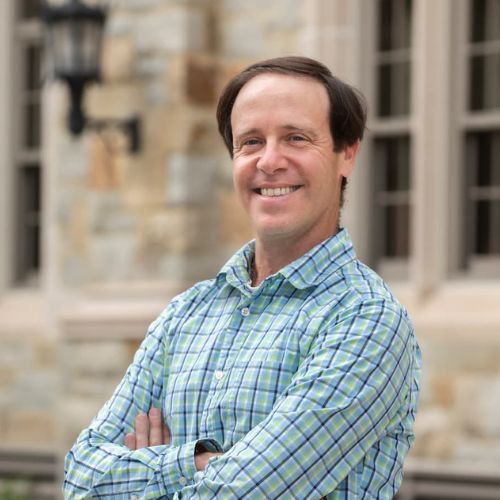
Ran Duchin
Research awards aren’t just plaudits but also speak to how interesting and insightful fellow scholars find someone’s work. The Journal of Finance’s awards, for example, are judged by its associate editors. The journal is considered one of the most influential in business-related fields.
Awards help increase the visibility of the recognized research, Duchin said. “When you get one of these awards, you receive it in a big auditorium filled with a who’s who of the profession,” he said. (His award was presented at the American Finance Association’s annual meeting in Philadelphia in January.) That attention can translate into more citations of a paper in other professors’ work and greater reach for the original research.
Duchin is a journal editor himself and has judged awards. He says judges try to assess “originality, impact, creativity and scholarly influence.” To some extent, they’re also making predictions since a paper’s real impact won’t be known for several years. Duchin said he looks for papers that make a simple but powerful point.
That’s what he and his coauthors strived to do with their prize-winning work. Researchers and policymakers have long understood that firms often sell off their most polluting facilities. Every sale involves a buyer, which presumably continues to operate the plant. Duchin and his coauthors investigated what happened to those sold facilities and their emissions.
They wanted to know whether the sales yielded real sustainability gains or let sellers do the corporate equivalent of a sleight of hand—making something seem to disappear while it continued to exist. To use corporate speak, they wanted to know whether sellers were greenwashing their operations.

Nadya Malenko
They concluded they were. They found that sellers often faced pressure from stakeholders, like customers and policymakers, to pollute less. Sellers were also more likely to offload a polluting facility than they were to close it or abate its emissions. Worse still, once plants sold, their pollution didn’t decrease.
In the paper, Duchin and his coauthors write that their findings suggest that firms sell plants to cosmetically improve their environmental ratings and regulatory compliance. Since overall pollution levels don’t decline, the findings suggest that ESG rating agencies, regulators, and some investors fail to recognize that sellers are prettifying themselves without making the world any greener.
One of Duchin’s finance colleagues, Nadya Malenko, the Wargo Family Faculty Fellow, was recognized several times in 2025 for her paper published during the previous year that investigates proxy advisors. Proxy advisors provide guidance to investors on how to vote in corporate elections on such matters as board membership.
Malenko and her coauthors found advisors don’t operate as critics claim, offering one-size-fits-all recommendations. Instead, they often tailor their advice to a particular client’s needs. “Proxy advisors have been discussed for 20 years, but custom recommendations were never mentioned,” Malenko said. The paper received several honors, including being recognized last year as a best research paper by the University of Delaware’s Weinberg Center for Corporate Governance.

Jamie Ladge
Jamie Ladge, a professor of management and organization and chair of that department, likewise saw her work lauded at a conference in 2025. Ladge’s paper, titled “Stable anchors and dynamic evolution: A paradox theory of career identity maintenance and change,” received the Copenhagen Award from the Academy of Management’s careers division.
Not all recognition comes from fellow academics. Research by Paul Schmelzing, also in finance, was flagged by Overton, a data provider for policymakers, as among the 10 academic papers most cited by policy documents in 2025. Schmelzing’s paper examines real interest rates across seven centuries and was included in a Financial Times article about these papers influential in policy circles.
Also recognized for their research in 2025 were Raquel Kessinger in the Management and Organization Department for her “Speaking Up and Speaking Out: How Employees Raise Social, Political, and Moral Issues at Work” and William S. McKiernan '78 Family Faculty Fellow Nan Liu in Business Analytics for “Integrated Scheduling and Capacity Planning with Considerations for Patients’ Length‐of‐Stays.”