
Global Public Health and the Common Good is an interdisciplinary undergraduate program integrating education, research, and service. Rooted in the Boston College liberal arts tradition, grounded in science, and guided by a commitment to social justice, it prepares you to understand and address complex public health challenges while promoting the health and well-being of people, communities, and the planet.
Public health is the science and art of preventing disease, prolonging life, and promoting the health of populations. At its core is a commitment to reducing health inequities and ensuring that everyone has the opportunity to achieve optimal health. Founded through a collaboration among the Boston College School of Social Work, Connell School of Nursing, and Lynch School of Education and Human Development, the program has grown into a vibrant initiative that brings together students, faculty, and practitioners from across the University.
Whether pursuing a career in epidemiology, policy, health care, social work, education, law, or another field, students learn to view their work through a public health lens and contribute to healthier, more equitable communities.
The B.A. in Global Public Health and the Common Good (GPHCG) provides you with a solid grounding in public health science through coursework in epidemiology and biostatistics along with an understanding of the structural, cultural, and social factors that influence health. You will gain a deep knowledge of ethics, public health theory and practice, law, and health inequities taught through a social justice lens. Completion of a B.A. degree in Global Public Health will prepare students for postgraduate study in public health or health policy (M.P.H., M.P.P., or Ph.D.); medical, dental, or veterinary school; advanced studies in nursing (D.N.P.); or direct entry into the public health workforce through employment in government agencies, research organizations, or not-for-profit organizations.
The major will consist of 36 academic credits, equivalent to 12 full-semester courses.
Coursework in the major will be grounded in epidemiology and biostatistics, the core disciplines of public health. You will gain intellectual and experiential understanding of the social determinants of health—the complex web of social, economic, environmental, political, and historical factors that influence health and drive the spread of disease.
In addition to the Major coursework, you will complete the Boston College Core Curriculum, a set of 15 required courses that will expose you to a wide range of subjects.
You must also complete the Boston College Language Proficiency Requirement, which requires demonstration of intermediate-level proficiency in a modern or classical language.
In the B.A. program, you must take a minimum of 36 credits, including the following required courses:
8
Required Courses
| Course # | Course Name | |
|---|---|---|
| PHCG 1210 | Public Health in a Global Society This gateway course introduces students to public health—what is and how it works. It examines public health’s unique features. It reviews public health’s triumphs. It focuses on the challenges confronting public health today: health disparities by race and socioeconomic status, environmental threats to health, and the urgent need to improve health equity. | |
| PHCG 2120 | Introduction to Epidemiology Epidemiology is the fundamental science of public health. This course introduces the basic principles and methods of epidemiology and biostatistics used to track health and disease in populations. | |
| PHCG 2130 | Global Public Health Law This course examines the critical role of law in creating and implementing social policy and achieving social justice and health equity. (offered in Fall only) | |
PHCG 3560
| Biostatistics, Data Analytics and Quantitative Methods in Public Health This course covers descriptive and inferential statistics used in biomedical and public health studies, with emphasis on practice and implementation. | |
| PHCG 3223 | Ethics of Global Public Health and the Common Good The course studies the ethical issues raised by real-world issues in global public health, and it considers approaches to address them. (offered in Spring only) | |
| PHCG 3600 | Health Inequities: Origins and Remedies This course examines the social, economic, political and historical factors that drive disparities in health and explores strategies to overcome these structural injustices. | |
PHCG 3300
| Global Health: Theory to Practice In this course, students learn how to apply public health principles to real-life global health problems through practical case studies. | |
PHCG 3810
| Public Health Planning, Practice, and Evaluation This course explores the theoretical and practical elements of public health program planning, monitoring, and evaluation. Principles and best practices in public health advocacy are discussed. |
2
Courses for Required Capstone Project
| Course # | Senior Capstone Experience |
|---|---|
PHCG4975 and PHCG4976 | Senior Capstone The Capstone is a two-semester, 6-credit, mentored experience that serves as the culmination of the undergraduate experience in Global Public Health and the Common Good. Spanning the full senior year, the Capstone provides you with an opportunity to put your skillset into practice and demonstrate your public health capacities. Through your Capstone placement, you will have the opportunity to design or support a project that tackles a real-world problem in global public health. You have two options for completing the Capstone: Option 1: Research: Students will complete a year-long research placement under the mentorship of a faculty member in Global Public Health or a related department, who will serve as the student’s project supervisor. By the end of the year, you will generate a research manuscript in a publishable format, presenting a literature review, methods, findings, and discussion of research implications. You will also present a research poster presentation at our campus symposium. Option 2: Students will complete a year-long, community-based internship with an organization relevant to public health, including nonprofits, community groups, or government agencies, under the supervision of an organizational staff member. By the end of the year, you will have contributed to organizational projects and developed a literature review, organizational profile, and professional portfolio of products evidencing your practice in this setting (which may include health communications materials, resource guides, practice protocols, or other products that support the organization’s work). You will also present a practice-oriented poster presentation at our campus symposium. The Capstone experience is supported by two 3-credit courses that meet once per week across both semesters. |
2
Electives
You will choose two electives from an extensive list of courses.
The B.S. in Global Public Health and the Common Good (GPHCG) is geared toward those who are interested in gaining additional education in the scientific foundations of public health. It includes all of the courses included in the B.A. in Global Public Health plus at least 15 additional science-related credits. Completion of this degree will prepare you for all of the careers available to Global Public Health B.A. graduates as well as for careers in academia, biomedical research, industry, and data sciences.
Students must take a minimum of 51 credits, including the required courses listed below.
Coursework in this major includes all of the courses included in the B.A. in Global Public Health plus at least 15 additional science-related credits. The science courses approved for inclusion the B.S. degree include courses in both quantitative science (Computer Science, Mathematics, and Economics) or laboratory science (Biology, Chemistry, Physics, Earth & Environmental Sciences and Neuroscience).
36 credits (the same courses as for the B.A.)
15 or more science-related credits from the following lists:
1
Course from This List (at least)
The 36 credits required for the BA described above, plus 15 credits consisting of:
| Course # | Course Name |
|---|---|
| CSCI 1101 | Computer Science I This course is an introduction to the art and science of computer programming and to some of the fundamental concepts of computer science. Students will write programs in the Python programming language. Good program design methodology will be stressed throughout. There will also be a study of some of the basic notions of computer science, including computer systems organization, files and some algorithms of fundamental importance. |
| Computer Courses Numbered CSCI1102 or higher | |
| MATH 1004 | Finite Probability and Applications This course is an introduction to finite combinatorics and probability, emphasizing applications. Topics include finite sets and partitions, enumeration, probability, expectation, and random variables. |
| MATH 1100 or MATH 1102 | Calculus I or Calculus II Each of these are a first course in the calculus of one variable. Topics in MATH 1100 include a brief review of polynomials and trigonometric, exponential, and logarithmic functions, followed by discussion of limits, derivatives, and applications of differential calculus to real-world problem areas. Topics in MATH 1102 include the algebraic and analytic properties of the real number system, functions, limits, and derivatives. Both conclude with an introduction to integration. |
| MATH 2210 | Linear Algebra This course is an introduction to the techniques of linear algebra in Euclidean space. Topics covered include matrices, determinants, systems of linear equations, vectors in n-dimensional space, complex numbers, and eigenvalues. The course is required of mathematics majors but is also suitable for students in the social sciences, natural sciences, and management. |
| Math Courses Numbered MATH 1100 or higher | |
| ECON 2201 or ECON 2203 | Microeconomic Theory This course develops a theoretical framework with which to analyze consumer and producer behavior. This analysis is then employed to investigate the determination of prices and output in various market situations, the implications for welfare, and the appropriate role for government intervention. |
| ECON 3305 | Market Design In this course, we will explore the theory and practice of market design at an introductory level. Beyond analyzing markets, we will learn how to design them. Key topics include auctions, school choice, organ exchange programs, matching with contracts, and so on. |
| ECON 3308 | Game Theory in Economics This course is an introduction to game theory. Game theory consists of a coherent set of concepts and analytical tools to examine interactive or strategic situations between people, that is, situations where the well being of one actor depends not only what s/he does but also on what others do. Hence in deciding how best to act, each person needs to consider how others are likely to act as well. Game theory has become a widely used tool of analysis in a wide range of disciplines, including economics, business, political science, law and international relations. |
| ECON 3385 | Health Economics This course is designed as an introduction to the study of health care economics with special emphasis on the pharmaceutical and health insurance industries. We will discuss the historical evolution of health care markets, current legislative changes, and public policy implications. Students will apply the tools learned in their introductory and intermediate microeconomics and econometrics courses to current and past topics in the health care industry. Presentation and discussion of current events and popular press books will familiarize students with recent topics in health care. International systems of health care will also be researched. |
| ECON 3391 | Economics of Energy and the Environment This course provides an overview of recent research in energy and environmental economics, with an emphasis on connecting policy questions of interest to available data and econometric methods. In the context of specific markets, we will first review the theoretical justifications for government intervention. We will then turn to the empirical evidence to see what recent economic scholarship has to say about a variety of energy policy questions, including: Should we ban fracking? Do oil pipelines reduce property values? What is the best way to promote renewable energy? Should we be more energy efficient? Students will be required to read and discuss academic articles each week, as well as write an empirical term paper. |
3
Courses from This List (at least)
| Course # | Course Name |
|---|---|
| BIOL 2000 | Biology Courses Numbered BIOL 2000 or Higher |
| CHEM 2000 | Chemistry Courses Numbered CHEM 2000 or Higher |
| PHYS 1500 | Physics Courses Numbered PHYS 1500 or Higher |
| EESC 2000 | Earth and Environmental Sciences Courses Numbered EESC 2000 or Higher |
| ENVS 2000 | Environmental Studies Courses Numbered ENVS 2000 or Higher |
| PSYC 2000 | Neuroscience Courses Numbered PSYC 2000 or Higher* |
*Neuroscience courses such as PSYC2274 Sensation & Perception (PSYC1110 prerequisite), PSYC2279 Foundations in Cognitive Neuroscience, and PSYC2285 Behavioral Neuroscience (PSYC1110 or BIOL2000 prerequisite). Other 2000+ level Neuroscience courses may also be accepted upon approval.
The Minor in Global Public Health and the Common Good (GPHCG) bridges foundational scientific inquiry with a deep commitment to societal well-being. Designed for students across all academic disciplines—from medicine, nursing, and environmental science to law, business, humanities, and the physical sciences—this interdisciplinary program explores how public health intersects with virtually every dimension of human endeavor. Whether you are preparing for an MPH, PhD, or MD program, or seeking to complement your education in fields such as economics, law, international policy, or education, the GPHCG minor will provide vital population-level perspective.
The minor consists of 3 required courses and 3 electives, for a total of 18 credits.
The required courses are:
Recognizing that public health is an diverse field that draws insights and technologies from many disciplines, approved electives span a wide range of schools and departments across Boston College. In addition to the three courses above, GPHCG minors must complete three additional elective courses from our elective list:, at least one of which must be from List B. A typical elective selection would be:
Other major-specific electives arrangements:
CSON Nursing majors must take NURS4260 and NURS4261 and these both count as List A electives. CSON Nursing students must take one more elective and it must be a List B elective.
Human-Centered Engineering majors can apply two specific courses towards both their HCE major and the GPHCG minor. Find information on HCE program-specific GPHCG minor rquirements here.
Additional courses at Boston College and in other institutions in the US and overseas may be may be considered as approved electives subject to the approval of the program director and Associate Deans.
3
Required Courses
| Course # | Course Name | |
|---|---|---|
| PHCG 1210 | Public Health in a Global Society This gateway course introduces students to public health—what is and how it works. It examines public health’s unique features. It reviews public health’s triumphs. It focuses on the challenges confronting public health today: health disparities by race and socioeconomic status, environmental threats to health, and the urgent need to improve health equity. | |
| PHCG 2120 | Introduction to Epidemiology Epidemiology is the fundamental science of public health. This course introduces the basic principles and methods of epidemiology and biostatistics used to track health and disease in populations. | |
| PHCG 2130 or PHCG 3223 | Global Public Health Law or Ethics of Global Public Health and the Common Good GPH Law examines the critical role of law in creating and implementing social policy and achieving social justice and health equity. (offered in Fall only) GPH Ethics studies the ethical issues raised by real-world issues in global public health, and it considers approaches to address them. (offered in Spring only) |
2
Electives
You will choose two electives from an extensive list of courses.
Acceptance to the Global Public Health and the Common Good program, both the major and the minor, is by application, which occurs annually in January. Stay informed of all things related to the Global Public Health program by subscribing to the newsletter.
You can apply in the spring semester of either your first- or sophomore year. Rising seniors will be considered only if they have already fulfilled many of the course requirements for the minor.
We seek a broad range of students from programs and schools across Boston College to apply including:
If you wish to apply to the program, you are encouraged to take Public Health in a Global Society (PHCG1210), offered in both fall and spring semesters, before applying. This course is open to students in all schools at Boston College, but it is not required to apply to the program.
Please contact publichealth@bc.edu with any questions regarding the application.
Students can gain research experience through a variety of opportunities at Boston College. Through the Undergraduate Research Fellows (UGRF) program, students can work with research-intensive faculty and their teams on scholarly projects and are financially compensated for their time and contributions. Many UGRFs contribute substantially to scholarly products, including conference presentations, published abstracts, and peer-reviewed papers. Outside of the UGRF program, students can participate in faculty-led research through both paid and unpaid opportunities. Seniors in the Global Public Health and the Common Good major can also gain research experience through their Capstone project by selecting the research-based track.
Our faculty in the Global Public Health and the Common Good program conduct innovative research addressing some of the most pressing public health challenges locally, nationally, and globally. Students are encouraged to learn about faculty research and explore opportunities to become involved in research projects. Faculty use a range of quantitative and qualitative approaches, including analyzing population-level datasets and conducting community-engaged research, to address these complex public health challenges.
Areas of research within the program include:
Our program prepares students to address today’s most pressing public health challenges—locally and globally—through a commitment to social justice, research, and community engagement.

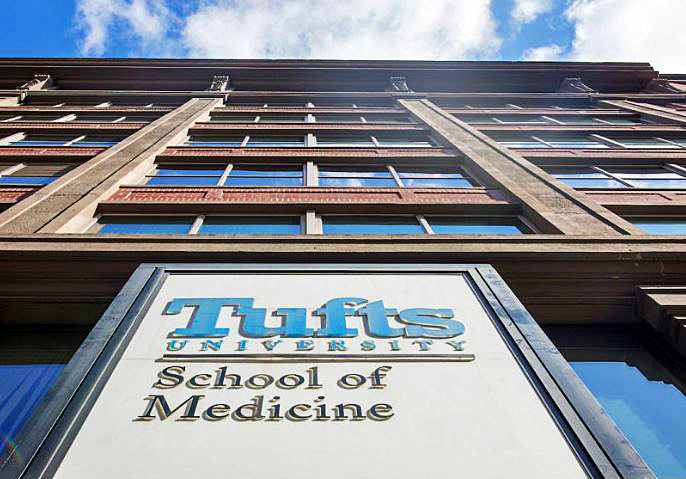
Tufts University is offering Boston College undergraduates an accelerated pathway to a Master of Public Health degree (M.P.H.). In this program, academically outstanding BC students have a unique opportunity to earn up to 12 Tufts M.P.H. credits during their time at BC and then complete an M.P.H. at Tufts in as little as one year, saving time and tuition costs.
Core courses provide students with foundational knowledge in public health. Concentration requirements and the Applied Practical Experience/Integrated Learning Experience provide a focus in a particular public health field.
Prospective M.P.H. students may major or minor in BC’s Global Public Health and the Common Good or other Boston College undergraduate programs.
GPHCG students can earn up to 12 credits toward the M.H.A. while an undergraduate and complete the graduate program in one year after graduation.