

Originally published in Carroll Capital, the print publication of the Carroll School of Management at Boston College. Read the June 2025 issue here.
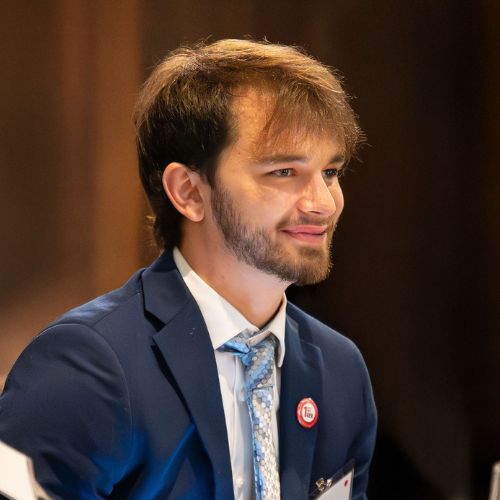
Leaning against the wood-paneled wall of a McElroy Commons conference room, Jake Smith, MBA ’25, watches as 13 middle schoolers drop their backpacks and crowd around circular tables. He’s here to run an Invest ’N Kids tutoring session. “It’s my favorite part of the week,” Smith says, as snippets of conversations on Greek gods, exponents, and upcoming state standardized tests swirl around him.
For more than 25 years, Invest ’N Kids (INK) has been pairing Carroll School of Management graduate students with Brookline middle schoolers on Thursday evenings for tutoring assistance, financial literacy games, and dinner. Smith knows the routine well—he was once one of those middle schoolers.

“It’s very full circle for me,” he says. Smith started attending INK as a pre-teen through the program Steps to Success, which provides low-income Brookline children and teens with educational and social opportunities. He credits Steps with showing him programs like INK that changed the trajectory of his life. Once he started his part-time MBA program in 2021, joining INK as a volunteer tutor was a “no-brainer,” says Smith, who works in the marketing industry. After two years of involvement, he stepped up as co-president of the Carroll School–sponsored service group.
Graduate students at the school are required to complete a certain number of community service hours during their programs: 20 hours for full- and part-time MBA students, and 10 for the other masters programs. “The thought was that this would make us stand out to prospective students, and it would attract a certain kind of person that wanted to be in the community and help others,” says Marilyn Eckelman, the Carroll School’s associate dean of graduate programs. To her knowledge, this is a unique requirement among graduate management programs, but other schools have expressed an interest in establishing their own guidelines.
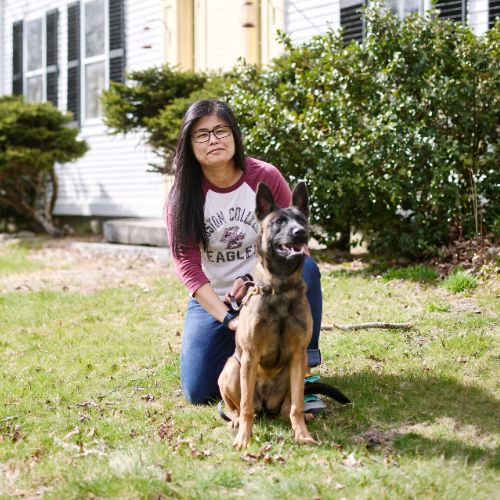
Since getting involved with INK again, Smith knows he’s in the unique position of understanding these students. While talking with one middle schooler from the William H. Lincoln School—where Smith also went—he shares a story about once beating her teacher in a badminton game. When others restlessly avoid pulling out their homework, he admits he used to do the same. “I talk to them about how we’re so lucky to have this time where you can get help,” Smith says.
Even late in the spring semester, a graduate student is getting on-boarded as a new tutor. She immediately dives in, pulling up a chair next to a student. A new tutor in the group also allows for each table to have a Carroll School student, or two, as resources. “I think the students like to do things together,” says Eckelman. The graduate office frequently sends out information on volunteer opportunities to its more than 800 students.

Erin Doherty '25
For the wider Boston College community, there is a Volunteer and Service Learning Center database. While the Carroll School’s undergraduate students are not required to volunteer, this desire to give back remains pervasive. Roughly 43 percent of undergraduate management students engage in community service during a typical week, according to a University survey.
“Something that drew me to BC was the service culture,” says Erin Doherty ’25. Early on in her Boston College experience, the finance and business analytics student got involved with the University’s Christian Life Community and completed the PULSE service learning program where she regularly engaged in volunteer projects.
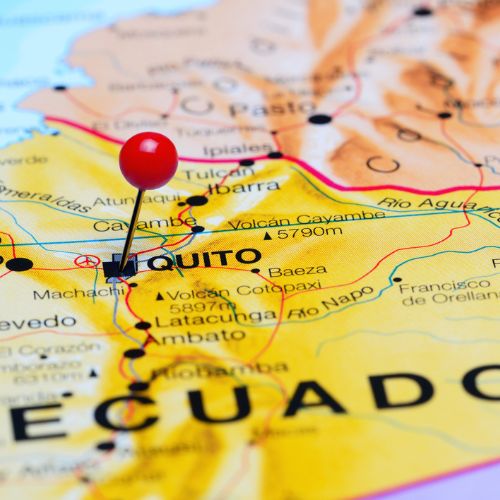
During her last winter break as a college student, Doherty traveled to Puebla, Mexico, as part of Arrupe International Encounters, one of Boston College’s signature faith, peace, and justice programs. “I choose to surround myself with people who want to understand other people’s perspectives,” Doherty explains, noting that Arrupe is all about thoughtfully engaging with different communities around the world.
The Puebla trip was themed around sustainability, and while Doherty and other group members worked on farming projects, they learned about the challenges facing local farmers. They also spoke with community members including migrants who had landed in Puebla from other South and Central American countries.
“ The one thing we always try to do is to show that BC has a soul. We’re always looking for ways to show [students] a better way to live as a contributing human being. ”
She knows that at the end of the day, being in Mexico wasn’t really about farming—she quips that the farmers can do that quite well without her—but it was about restoring human dignity. “People can look down on farmers or look down on migrants,” she says. “The thing I got out of the trip was that everyone’s a human. The joy of togetherness was very universal.”
“The one thing we always try to do is to show that BC has a soul. We’re always looking for ways to show [students] a better way to live as a contributing human being,” says Eckelman, adding that as students leave the University, she hopes they don’t forget to “look behind you and see who you can help.”
Smith also feels that joy of togetherness when working with the young students of INK. Some will tell him it’s now their dream to go to Boston College. “What’s two hours of my time to help somebody go down the same path as me? It’s really as simple as that,” he says. “I get to give other people the opportunity to have the opportunities I was given.”