

Boston College Research Day: Celebrating Interdisciplinary Research and Innovation
Tuesday, October 13, 2026
Hayden Hall
*All events took place in the Hayden Hall auditorium, Room 107, unless otherwise noted.
Boston College Research Day: Celebrating Interdisciplinary Research and Innovation was held on Tuesday, October 13, 2026 as part of the celebratory lead-up to Fr. Butler’s presidential inauguration later that week, this campus-wide event brought the Boston College community together to honor and highlight research excellence across every discipline.
This year’s program featured an extraordinary lineup of world-class scholars and visionary leaders. We were thrilled to welcome keynote speakers Holden Thorp, Editor-in-Chief of Science, and Moungi Bawendi, 2023 Nobel Laureate in Chemistry. The schedule also spotlit the impressive breadth of scholarship within our own community through presentations by BC faculty—including Qiong Ma, Jim Morken, Patti Underwood, and Ed-Dee Williams—as well as an engaging faculty panel discussion on AI in the afternoon. Student presentations were also featured during the event.
Visit the Program and Speakers sections for complete schedule details and presenter bios.
Keynote Speakers

Moungi Bawendi, Lester Wolfe Professor of Chemistry at MIT
Moungi Bawendi is an American–Tunisian–French chemist. He is currently the Lester Wolfe Professor at the Massachusetts Institute of Technology. Bawendi is known for his advances in the chemical production of high-quality quantum dots. For this work, he was awarded the Nobel Prize in Chemistry in 2023. Bawendi was one of the most cited chemists of the decade from 2000 to 2010. He is a leading figure in the research and development of quantum dots. Quantum dots are tiny semiconducting crystals whose nanoscale size gives them unique optical and electronic properties.

Holden Thorp, Editor-in-Chief, Science and Professor of Chemistry and Medicine, George Washington University
Dr. Thorp's research interests are in drug development and bioinorganic chemistry. He started a company called Viamet Pharmaceuticals that developed VIVJOA, which is currently on the market for chronic yeast infections. He is a Fellow of the American Academy of Arts and Sciences, National Academy of Inventors and, the American Association for the Advancement of Science. Dr. Thorp holds an honorary degree from Hofstra University and Doctor of Laws degree from North Carolina Wesleyan College. He was Washington University Provost from 2013-2019. He was the 2021 GW Department of Chemistry Caress Award recipient.
BC Faculty Presenters

Stefano Anzellotti, Associate Professor of Psychology
Stefano Anzellotti graduated with a BS in Mathematics at the University of Trento and a Bachelor of Music in Clarinet performance at the Conservatory of Trento. He completed a Ph.D in Psychology at Harvard University with a focus on Cognitive Neuroscience, and a postdoctoral fellowship at MIT. He studies how humans perceive and understand the world around them, how these abilities support social cognition, and the disorders that can affect them. To investigate these aspects of cognition, his research builds computational models of human abilities and tests them using behavioral and neuroimaging data. His work has been published in journals including Science and Nature Methods, in AI conferences including NeurIPS and ICML, and has received support from the NSF CAREER award and the Simons Foundation.

Marina Bers, Augustus Long Professor of Education & Program Director, Learning, Design, and Technology
Marina Umaschi Bers is the Augustus Long Professor of Education at Boston College, with a secondary appointment in Computer Science, affiliated with the Schiller Institute, and director of the Developmental Technologies (DevTech) research group, which she founded in 2001. Her research focuses on designing innovative learning tools—such as co-developing the ScratchJr programming language and the screen-free KIBO robot kit—that promote computational thinking and socio-emotional development as a modern literacy for young children. A prolific author of seminal books including Beyond Coding and Coding as a Playground, Prof. Bers centers her theoretical approach on leveraging play, robotics, and coding to support positive youth development and creative learning in early childhood education.
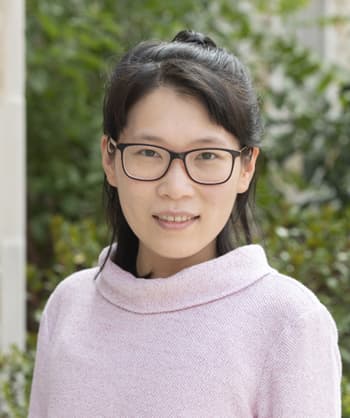
Qiong Ma, Associate Professor of Physics
Dr. Qiong Ma got her Bachelor’s degree from the University of Science and Technology of China (USTC). She then moved to MIT where she got her Ph.D. of physics under the supervision of Prof. Pablo Jarillo-Herrero and in close collaboration with Prof. Nuh Gedik. Her group focuses on uncovering and understanding the fundamental physics of novel quantum materials, particularly about electron and phonon dynamics, low dimensionality, topology, and correlation. Her group applies advanced nano-/micro-sized device fabrications to control multiple degrees of freedom in quantum materials and combine low-temperature electronic transport and nonlinear, ultrafast, and near-field optoelectronic microscopies and spectroscopies to probe the physics.

James P. Morken, Professor of Chemistry; Louise and Jim Vanderslice and Family Chair
Dr. James P. Morken is a Professor of Chemistry holding the Louise and Jim Vanderslice and Family Chair at Boston College, where he earned his Ph.D. following his undergraduate studies at UC Santa Barbara. His research in synthetic organic chemistry focuses on developing new metal-catalyzed asymmetric reactions and applying them to complex natural product syntheses, such as borrelidin, inostamycin, fraxinellone, and dihydroxanthatin. By combining organometallic, physical organic, and computational chemistry, Dr. Morken’s laboratory aims to control enantioselectivity for the design of therapeutics, materials, and commodity chemicals while training students for careers in chemical synthesis.
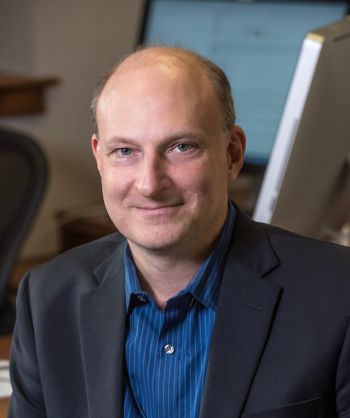
Sam Ransbotham, Professor in the Carroll School of Management & Peter F. Drucker Chair
Sam Ransbotham is a Professor of Business Analytics who teaches courses on machine learning, artificial intelligence, and applied analytics. Prior to earning his Ph.D., MBA, and bachelor’s degree in chemical engineering from the Georgia Institute of Technology, he founded a global software company serving major international organizations like the United Nations. A recognized leader in security and business analytics, Dr. Ransbotham has received both an NSF CAREER Award and the INFORMS ISS Sandra A. Slaughter Early Career Award. Alongside his academic research, he co-hosts the podcast Me, Myself, and AI and has served in prominent editorial roles at Management Science, Information Systems Research, and MIT Sloan Management Review, where he edits the Big Ideas initiatives on AI and business strategy.

Natalya Shnitser, Law School Professor & David and Pamela Donohue Faculty Fellow
Natalya Shnitser is a Professor and David and Pamela Donohue Faculty Fellow at Boston College Law School, where she focuses her research on U.S. retirement security, employer-provided healthcare benefits, and the regulation of financial intermediaries. A Phi Beta Kappa graduate of Stanford University (B.A., M.A.) and a Yale Law School J.D. graduate—where she served as Editor-in-Chief of the Yale Journal on Regulation—she teaches courses on corporations, employee benefits, and fiduciary law. Before entering academia, Shnitser practiced law at Cleary Gottlieb Steen & Hamilton and served as Executive Director of the Yale Law School Center for the Study of Corporate Law, later becoming the inaugural Donohue Assistant Professor at BC Law and serving as Chair of the AALS Section on Employee Benefits and Executive Compensation.

Patricia Underwood, Assistant Professor at the Connell School of Nursing
Patricia Crowley Underwood, Ph.D., APRN, FNP-BC, is an assistant professor at the Connell School of Nursing. She is also an Endocrine Nurse Practitioner at the VA Boston Healthcare System. She earned her undergraduate degree in nursing from the University of Pennsylvania and her master’s and doctoral degree from Boston College. Dr. Underwood’s pre- and post-doctoral work focused on identifying biomedical and genetic markers associated with hypertension and diabetes mellitus (DM). Subsequent work focused on developing and evaluating nurse-led interventions to improve health outcomes for surgical patients with poorly controlled DM. Her clinical practice focuses on veterans with diabetes and the delivery of DM self-management technology (insulin pumps and continuous glucose monitors). She is the recipient of many awards including Young Investigator Award at NINR/NIH as well as a statistics fellowship at the University of Basel, Switzerland.

Ed-Dee G. Williams, Assistant Professor at the School of Social Work
Dr. Ed-Dee G. Williams is an Assistant Professor at the Boston College School of Social Work, having earned his Ph.D. in Social Work and Sociology and his MSW from the University of Michigan before completing a postdoctoral fellowship focused on technology-based mental health interventions. His research utilizes community-engaged, mixed-methods, and socio-ecological approaches to address the mental health needs of Black youth and Black autistic youth, with an emphasis on depression and help-seeking behaviors. In addition to developing simulation-based tools to help youth build coping skills, Dr. Williams collaborates with the Black Empowerment in Autism (BEAM) network to foster more inclusive autism research and draws on his background as a former clinical social worker to advocate for Black family mental wellness through research, policy, and clinical consultation.
Leadership & Hosts

Thomas Chiles, DeLuca Chair in Biology & Vice Provost for Research & Academic Planning
Dr. Thomas Chiles collaborates with Boston College's Global Observatory for Planetary Health to study global environmental health threats, particularly the impact of air pollution in India, ocean pollution, and plastic exposures across their life cycle—work building on his contribution to The Lancet Commission, which linked 9 million annual pollution deaths to climate change. In parallel, his laboratory investigates the molecular mechanisms and bioenergetics driving B lymphocyte growth and survival using 2D-NMR and mass spectrometry, while also developing nanosensors for multiplex biomarker detection.
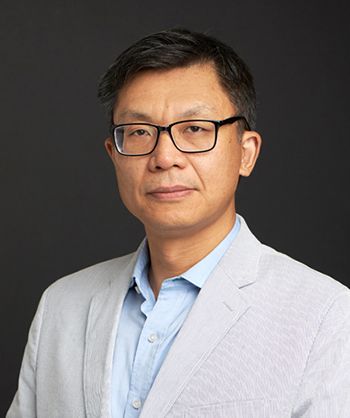
Yi Ming, Institute Professor of Climate Science and Society, and Professor of Earth & Environmental Sciences
Dr. Yi Ming is the Institute Professor of Climate Science and Society and Professor of Earth and Environmental Sciences, specializing in using climate models, observations, and theories to understand Earth's climate system and its societal impacts—particularly regarding extreme events like droughts, floods, and hurricanes. Formerly a Senior Scientist and Divisional Leader at NOAA’s Geophysical Fluid Dynamics Laboratory and a Princeton faculty member, he holds a Ph.D. from Princeton and dual bachelor's degrees from Tsinghua University. A prolific scholar with over 100 peer-reviewed papers, Dr. Ming has received major honors, including the Presidential Early Career Award for Scientists and Engineers (PECASE), the AMS Henry G. Houghton Award, the AGU Ascent Award, and the WMO Norbert Gerbier-Mumm International Award.
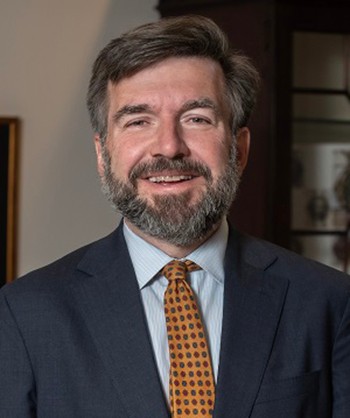
David Quigley, Robert L. and Judith T. Winston Provost and Dean of Faculties
David Quigley is the Robert L. and Judith T. Winston Provost, Dean of Faculties, and Professor of History at Boston College. A scholar of race and democracy in 19th-century American cities, he earned his B.A. from Amherst College and his M.A. and Ph.D. from New York University, authoring key works like Second Founding and Jim Crow New York. After starting his career as a New York City public high school teacher, Dr. Quigley joined Boston College in 1998, earning the Distinguished Teaching Award in 2007 and serving as Dean of the College and Graduate School of Arts and Sciences from 2008 to 2014. As Provost, he co-chaired the strategic planning initiative Ever to Excel, overseeing major academic expansions including new programs in engineering and integrated science, core curriculum renewal, and the hiring of over 400 new faculty.

Edson Severnini, Institute Professor & Associate Professor of Economics
Edson Severnini is an Associate Professor of Economics at Boston College, Core Faculty at the Schiller Institute, and a Research Associate at the NBER. Joining Boston College from Carnegie Mellon University, he earned his Ph.D. in Economics from UC Berkeley following graduate and undergraduate degrees in Brazil. His research operates at the intersection of energy, environmental, and health economics, focusing on climate change, energy transitions, and the long-term impacts of pollution and electrification on health and economic development. Supported by the National Science Foundation, his work has been published in leading journals including the American Economic Review, Nature Energy, and PNAS Nexus (where he serves on the editorial board), and earned him the 2023 EAERE Outstanding Publication Award.

Dunwei Wang, Interim Seidner Family Executive Director & Professor of Chemistry
Dunwei Wang is the Margaret A. & Thomas A. Vanderslice ’53 Chair and Professor of Chemistry at Boston College, where his research focuses on the fundamental science of energy and resource utilization. After earning his B.S. from the University of Science and Technology of China, his Ph.D. from Stanford University, and completing postdoctoral research at Caltech, he joined the BC faculty in 2007. A pioneer in artificial photosynthesis and nanomaterial charge manipulation, his work spans solar energy conversion, novel battery chemistries, natural gas conversion, and innovative methods for sustainable plastic synthesis and recycling. His contributions to green chemistry and materials science have earned him prestigious recognitions, including an NSF CAREER Award, a Sloan Research Fellowship, and a Japan Society for the Promotion of Science Fellowship.

Gautam N. Yadama, Dean of the School of Social Work
Gautam N. Yadama is Professor and the Dean of Boston College School of Social Work. His research is focused on understanding poverty and environment dynamics, and interventions to address the attendant social, economic, environment, and health outcomes. He has implemented a randomized control trial to study the sustainability of new and efficient energy technologies in rural India to reduce household air pollution and improve health and wellbeing of women and children. His book, Fires, Fuel & the Fate of 3 Billion: State of the Energy Impoverished (Oxford University Press), outlines an argument for transdisciplinary research to tackle complex problems such as household air pollution that reside at the intersections of poverty, environment, and health. He is using social network analysis and community based system dynamics to study how interventions to reduce pollution are adopted and sustained by the poor in rural India. He is a member of the Implementation Science Network on Clean Cooking at the Fogarty Institute of the National Institutes of Health, USA.
ProgramTuesday, October 13, 2026 | Hayden HallAll events took place in the Hayden Hall auditorium, Room 107, unless otherwise noted. | |
|---|---|
| 8:30-9:00 AM | REGISTRATION AND BREAKFASTLight continental breakfast |
| 9:00-9:10 AM | WELCOME & OPENING LOGISTICS
|
| 9:10-9:20 AM | OPENING REMARKS
|
| 9:20-9:30 AM | INTRODUCTION OF KEYNOTE SPEAKER
|
| 9:30-10:20 AM | KEYNOTE I: FROM CURIOSITY TO BREAKTHROUGH: UNLOCKING THE NANOWORLD
|
| 10:20-10:40 AM | MORNING COFFEE BREAK |
| 10:40-11:20 AM | BC FACULTY SPOTLIGHT
Chair: Dunwei Wang |
| 11:20-11:40 AM | STUDENT FLASH TALKS (SESSION I)Chair: Yi Ming, Institute Professor of Climate Science and Society, and Professor of Earth & Environmental Sciences |
| 12:00-1:00 PM | RESEARCH LUNCH
|
| 1:00-1:10 PM | INTRODUCTION OF KEYNOTE SPEAKER
|
| 1:10-2:00 PM | KEYNOTE II: DOING SCIENCE DURING TURMOIL: KEEP GOING AND CHECK CAREFULLY
|
| 2:00-2:40 PM | BC FACULTY SPOTLIGHT
Chair: Dunwei Wang |
| 2:40-3:00 PM | STUDENT FLASH TALKS (SESSION II)Chair: Edson Severnini, Institute Professor & Associate Professor of Economics |
| 3:00-4:15 PM | STUDENT POSTER SESSION
|
| 4:15-5:00 PM | PANEL DISCUSSION: IMPLICATIONS OF AI TO RESEARCH AND TEACHING AT BOSTON COLLEGE AND BEYOND
Moderator: Thomas Chiles |
| 5:00-6:00 PM | CLOSING RECEPTIONLight hors d’oeuvres and refreshments in Room 501 |
Student Posters
Two student flash talk sessions took place, one in the morning and one in the afternoon. Following the second flash talk, the student poster session began. The schedule, titles, and locations for student posters can be found below.
Student Presentation Schedule
| 11:20-11:40 AM | Flash Talks Session 1Isabella Allen, Nick Collins, Victor Ganson, Cameron Grant, Avner ‘Avi’ Goldstein, Marina Ruzic, Sasha Smith, Jiwei ‘Victor’ Zhang |
| 2:40-3:00 PM | Flash Talks Session 2Giada Bozzelli, Amy Bulger, Erika Clairgue, Jill Doyle, Vishal Easwar, Sophia Eisenberg, Max German, Yiyao Huang, Jordan Keels, Xinyi ‘Skylar’ Yang, Haitisha Mehta |
| 3:00-4:15 PM | Student Poster SessionIndividual poster details below |
Student Poster Details
Attitudes, Norms, and Preferences of Asian Pacific Islander American Young Adults Towards Healthy Eating, Physical Activity, and Lifestyle Change Programs: A Scoping Review
Isabella Allen
Connell School of NursingLocation: Room 104
Financial Vulnerability Among Boston-Area Homeless Service Providers: Quantifying Dependence on HUD Continuum of Care Funding
Victoria Awadallah & Ella Ridgway
Morrissey College of Arts & Sciences
History/Psychology & Political Science
Location: Room 104
The Maturity Insurance Channel of Monetary Transmission
Giada Bozzelli
Morrissey College of Arts & Sciences
Economics Department
Location: Room 104
The Relationship Between What Matters Conversations and the Quality of Healthcare Reported by Older Adults: A Secondary Analysis
Amy Bulger
Connell School of Nursing
Location: Room 104
Protective Factors for Mental Health and Relational Well-being Among Latin American Displaced Families: A Focused Narrative Review
Erika Clairgue Caizero
School of Social Work
Location: Room 104
Modulation of the Self-Reference Effect Through Third-Person Insights in Individuals with Depression
Nicholas Collins
Morrissey College of Arts & Sciences
Psychology & Neuroscience
Location: Room 104
Postpartum Mental Health After Hypertensive Disorders of Pregnancy: Associations Across Latent Social Position Profiles
Jill Doyle
Connell School of Nursing
Location: Room 104
Behind the Blank Stare: How Teachers’ Beliefs About Attention and Motivation Shape Their Reactions to Student Disengagement
Vishal Easwar
Lynch School of Education and Human Development
Location: Room 104
State-Level Restorative Justice Policies and Gun and Weapon Carrying Among U.S. High School Students: Evidence from a Nationally Representative Study
Sophia Eisenberg
School of Social Work
Location: Room 122
Smoothed Property Elicitation for Discrete ML Calibration
Vic Ganson
Morrissey College of Arts & Sciences
Computer Science Department
Location: Room 122
Vital for Democracy: Compelling(ly) Interest(ing) Tweets
Max German
Law School
Location: Room 122
Infrastructure for Community-Engaged Inquiry: Institutional Support and the Research-Practice Partnership
Sydney Geyer and Nishat Akhi
Lynch School of Education and Human Development
Location: Room 122
Beneath the Thick Veil of Night: Oysters by Gaslight in Nineteenth-Century Boston
Avner “Avi” Goldstein
Morrissey College of Arts & Sciences
History Department
Location: Room 122
PyBirch: Toward Closed-Loop Materials Characterization
Cameron Grant
Morrissey College of Arts & Sciences
Physics Department
Location: Room 122
Can Small Transformers Learn the Language of Coxeter Groups?
Yiyao Huang
Morrissey College of Arts & Sciences
Mathematics & Economics
Location: Room 122
“We feel like we’ve been heard”: Exploring Community Members’ Perspectives on Participating in the HEALing Communities Study
Elizabeth Jadovich
School of Social Work
Location: Room 122
Understanding Incident Diabetes After COVID-19: Where Genetics Meets Social Determinants of Health
Jordan Keels
Connell School of Nursing
Location: Room 122
Strength in Context: Mapping Multilevel Protective Processes for South Asian Mental Well-Being
Haitisha Mehta
School of Social Work
Location: Room 122
Evolution of Thermotolerance in a Human Fungal Pathogen Through Recurrent Mutation of a Sugar Transporter
Marina Ruzic
Morrissey College of Arts & Sciences
Biology Department
Location: 1st floor lounge area
College in an Age of Mass Incarceration
Rethinking Higher Education Through a College-in-Prison Lens
Sasha Smith
Lynch School of Education and Human Development
Location: 1st floor lounge area
Nothing without the Bishops, Nothing without the Presbyters, Nothing without the Consent of the People': Enduring Questions of Eccleisal Governance.
Emily Turner
Morrissey College of Arts & Sciences
Theology Department
Location: 1st floor lounge area
La Niña-to-El Niño Transition Amplifies Wildfire Risk in Australia
Xinyi “Skylar” Yang
Morrissey College of Arts & Sciences
Earth & Environmental Sciences Department
Location: 1st floor lounge area
Highly Efficient Ethylene Glycol Production from Photocatalytic Ethylene Oxidation over Commercial Zinc Oxide Nanopowder
Jiwei “Victor” Zhang
Morrissey College of Arts & Sciences
Chemistry Department
Location: 1st floor lounge area
Campus Map and Parking:
Parking is available at the nearby Beacon Street and Commonwealth Avenue Garages.
Boston College is also accessible via public transportation (MBTA B Line - Boston College).