

Trauma and Its Discontents
Wednesday, April 22, and
Thursday, April 23, 2026
Boston College
The rise of psychological discourse as one of our culture’s dominant approaches to self-understanding has yielded undeniable benefits. Our increased awareness of psychological suffering has provided us with a fuller, more authentic picture of human life and helped us to respond to the needs of those weighed down by life’s tragedies. Along with such benefits, however, come losses and distortions that contribute to the loneliness and despair felt throughout contemporary American life. There are few examples of this ambiguity more glaring than the sudden pervasiveness of “trauma” and “trauma-informed” language systems. The rapid rise of trauma as an interpretive lens through which to understand human behavior has brought with it both advantages and costs. The purpose of this unique gathering is to open the space for interdisciplinary dialogue–including disciplines from across the humanities such as history, philosophy, theology, psychology, sociology, and literature–to interrogate and draw out the underlying assumptions of today’s trauma discourse. With an aim of assisting the field of psychology to take seriously more sophisticated notions of human flourishing, this critical engagement will offer both insights and critiques of one of contemporary society’s most ubiquitous concepts.
Public Offerings

Wednesday, April 22, 5:00–6:30 p.m.
Boston College Corcoran Commons Heights Room & Online

Thursday, April 23, 4:30–7:00 p.m.
Coolidge Corner Theatre
Participants
Staff Writer
The New Yorker

Associate Professor of Chinese
Fordham University

lbert and Jessie Danielsen Professor of Psychology of Religion and Theology
Boston University

Dean, Woods College of Advancing Studies
Boston College

Professor of Anthropology and of Global Health & Social Medicine
Faculty Director, Harvard University Native American Program, Harvard University

Director, Institute for the Study of Race and Culture;
Associate Professor of Counseling Psychology, Boston College

Board of Governors Distinguished Professor Emeritus of Sociology
Rutgers University; Institute for Health, Health Care Policy & Aging Research

Professor of Theology
Boston University School of Theology

Assistant Professor, Associate Director, Center for Psychological Science
William James College

Research Professor, University of Virginia; Senior Fellow, Institute for Advanced Studies in Culture;
Co-Director, Colloquy on Culture and Formation
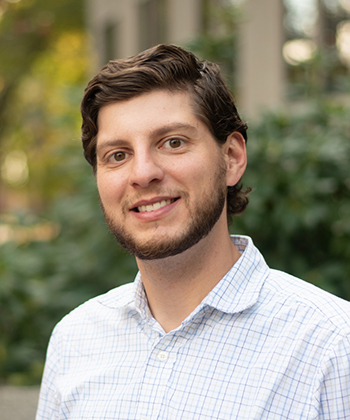
Director of Research & Curriculum, Center for Psychological Humanities & Ethics
Boston College

Acting Program Director, PsyD in Clinical Psychology & Psychological Humanities, Boston College;
Research News Editor, Mad in America

The Moral Ecology Trust
