Graduate
We offer a master of arts degree in Classics (Latin and Greek together). Many of our students are preparing for careers in teaching at the secondary level or for careers in related fields, or planning to pursue a Ph.D.
The M.A. in Classics requires 10 courses (30 credits) in Greek and Latin at the graduate level, completion of an independent reading list, demonstration of proficiency in a modern foreign language, usually French or German, and comprehensive written and oral examinations.
Six advanced language courses a year are normally available to graduate students. Additional courses may be available through the Boston-area consortium and (with departmental permission) classical civilization courses may be taken at BC. Students are encouraged to develop a seminar paper into a conference paper for presentation.
Proficiency is demonstrated by a one-hour translation test in which the use of a dictionary is allowed. This test does not form part of the comprehensive exams. It should be taken at a student's earliest convenience, the sooner the better.
These include written translation exams in Greek and Latin, a two-hour comprehensive essay exam in Greek and Latin literature and culture, and an oral research presentation.
Each written translation exam, one for Greek and one for Latin, requires the translation of two (out of four) passages, including one prose and one poetry passage.. The translation exams are based on the reading list; use of a dictionary is allowed.
The comprehensive exam offers four essay topics of which the student will choose three. These essays are an opportunity to demonstrate knowledge of the ancient world by drawing on different authors, genres, and other kinds of evidence to comment on larger thematic issues in the ancient world.
Present a graduate research paper to the department and engage in a Q&A conversation about their project.
The reading list lays out the works we expect students to gain familiarity with in the course of their studies. Some of these works will be the focus of our courses while others should be the object of individual and group study.
Supplementary Reading List
As a general background to the study of classical antiquity, we strongly recommend that you read some basic works on the political and social history of Greece and Rome, especially if you have never taken a course on those subjects. The books below are recent classics that we like, but there are many available; feel free to make substitutions.
For Greece
- Robin Osborne, Greece in the Making, 1200-479 BC
- Simon Hornblower, The Greek World, 479-323 BC
- Loren J. Samons, ed. Cambridge Companion to the Age of Pericles
- Greek social history: e.g. J.N. Davidson, Courtesans & Fishcakes: The Consuming Passions of Classical Athens
For Rome
- Harriet Flower, Roman Republics
- Colin Wells, The Roman Empire
- Ronald Syme, The Roman Revolution
- Roman social history: e.g. Robert Knapp, Invisible Romans; Potter & Mattingly, Life, Death, and Entertainment in the Roman Empire (esp. good on religion, demography, & spectacles); Michael Peachin, ed. The Oxford Handbook of Roman Social Relations; T. Wiseman, Catullus and His World
For literary history
- Gian Biagio Conte, Latin Literature: A History
- Tim Whitmarsh, Ancient Greek Literature
Limited scholarship aid is available, chiefly in the form of tuition remission. A teaching assistantship, which carries a stipend in addition to free tuition, is offered for one semester.
Additional Ancient Language Study Opportunities
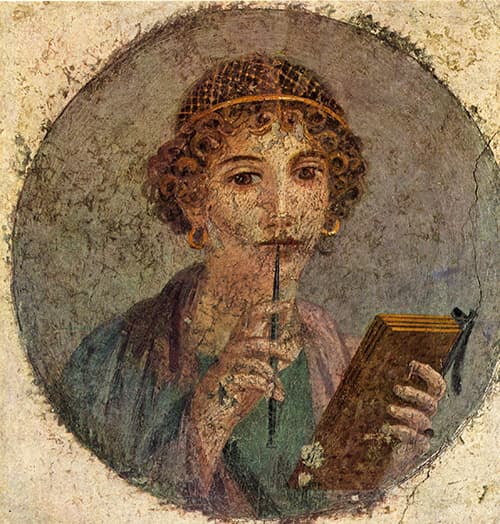
The Morrissey College of Arts and Sciences and the School of Theology and Ministry offer coursework and host reading groups in the languages of the Bible, Church Fathers (Patristic Texts), ancient Greece and Rome both for graduate and undergraduate students.
Questions? Please contact: