
ICHAC aims to bring together leading academic scientists, researchers and research scholars to exchange and share their experiences and research results on all aspects of Heteroatom Chemistry. It also provides a premier interdisciplinary platform for researchers, practitioners, and educators to present and discuss the most recent innovations, trends, and concerns as well as practical challenges encountered and solutions adopted in the fields of Heteroatom Chemistry.
The following themes will be highlighted at the meeting, but submissions related to all topics on heteroatom chemistry are encouraged:
• New syntheses of heteroatom compounds
• Structure and bonding in heteroatom compounds
• Reactive intermediates and mechanisms in heteroatom chemistry
• Catalysis with heteroatom-containing ligands, complexes, and frameworks
• Heteroatom-based materials: polymers, clusters, and functional materials
• Chemical biology applications of heteroatom compounds
Conference Location
BC & MIT
The ICHAC 2027 meeting will take place on the beautiful campus of Boston College. Located approximately six miles west of downtown Boston, Boston College is home to over 14,000 students and is comprised of nine schools and colleges. The University was founded in 1863 as a means of providing a college education for the children of Irish-Catholic immigrants. Originally located in Boston, the college moved to its current location in 1913 where four academic buildings were erected over the next ten years. These buildings, and many that followed, were designed in English Collegiate Gothic style. The Chemistry Department was first housed in one of the original four structures, Devlin Hall, until completion of the 109,000-square-foot Merkert Chemistry Center, which opened in the fall 1991. Currently the Chemistry Department at Boston College is home to 23 full-time faculty members and 125 doctoral students.
Located in Cambridge, Massachusetts, directly across the Charles River from Boston's Back Bay, the Massachusetts Institute of Technology was incorporated in 1861 by William Barton Rogers to advance "useful knowledge" through laboratory-based instruction in science and engineering. MIT's first chemistry class of 15 students met in Boston in 1865. After the Institute moved from Boston to Cambridge in 1916, the department expanded across the main campus complex (Buildings 2, 6), and in 1970 it opened the I.M. Pei-designed Dreyfus Building (Building 18), a 132,000-square-foot facility for organic, organometallic, and biological chemistry that was fully renovated in 2003. Today, the Department of Chemistry is home to 34 full-time faculty members, 260–280 doctoral students, and 130 postdoctoral researchers.
Boston
The capital of Massachusetts, Boston is one of the oldest cities in the United States. It is also a perfect blend of the historic and the contemporary. The Boston National Historical Park contains many of the sites that played a prominent role in the country’s bid for independence. This includes the 2.5 mile long Freedom Trail which winds through downtown Boston incorporating 16 locations of historical significance. Always innovative, Boston spearheaded a number of firsts throughout the second half of the 19th century and early 20th century: ether was used as the first anesthetic at Boston’s Massachusetts General Hospital, the nation’s first subway system went into operation and Alexander Graham Bell patented the telephone. The city contracted with Frederick Law Olmstead to beautify Boston with a network of urban parks stretching from the Boston Common to the Jamaica Plains neighborhood. This project paved the way for the development of Fenway Park, the oldest ballpark in Major League Baseball. In the 20th century, Boston continued its emergence as an innovation hub and world-class city. The city has emerged in the 21st century as a leader in the life sciences. The cities of Boston and Cambridge alone are home to over 250 biotech companies, the top four NIH-funded hospitals in the United States and 48 colleges and universities.
International Advisory Board
Members
• Eric Block, University at Albany, USA
• Takeshi Akasaka, University of Tsukuba, Japan
• Chunming Cui, Nankai University, China
• Derek Gates, University of British Columbia, Canada
• Annie-Claude Gaumont, University of Caen, France
• Holger Helten, Universität Würzburg, Germany
• Marian Mikolajczyk, Polish Academy of Sciences, Poland
• Aleš Růžička, University of Pardubice, Czech Republic
• Yong Tang, Shanghai Institute of Organic Chemistry, China
• Norihiro Tokitoh, Kyoto University, Japan
Emeritus Members
• Carsten Bolm, RWTH Aachen University, Germany
• Tim Gallagher, University of Bristol, UK
• Eusebio Juaristi, Cinvestav, Mexico
• Yong Hai Kim, Korea Advanced Institute of Science and Technology, South Korea
• Christopher Reed, UC Riverside, USA
• Alfredo Ricci, University of Bologna, Italy
• Oleg Sinyashin, Kazan Scientific Center of Russian Academy of Sciences, Russia
• Binne Zwanenburg, Radboud University Nijmegen, The Netherlands
In Memoriam
• Richard Glass, The University of Arizona, USA (1943 –2025)
Conference Organizers
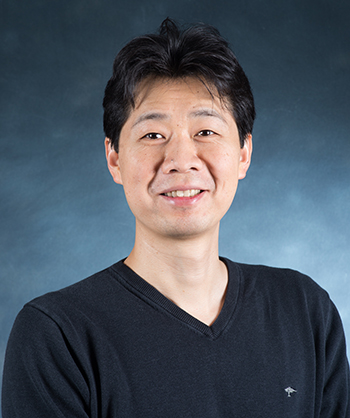
Co-Chair of the Organizing Committee
Boston College

Co-Chair of the Organizing Committee
Massachusetts Institute of Technology
Contact
Boston College Department of Chemistry
Merkert Chemistry Center
Boston College
2609 Beacon Street, Chestnut Hill, MA 02467-3860
(617) 552-1735
Email: ichac-2027@bc.edu
Webpage: www.bc.edu/ichac-15