

Be a Career Champion
As BC faculty and staff, you are key partners in empowering students to pursue careers and lives of meaning and purpose. Our community's collective participation in career education is vital to ensuring all students have equitable access to career resources and opportunities.
Faculty and Staff Career Toolkit
Support your students’ career development with these tools and resources. Use the materials below to help students find job and internship opportunities, identify their strengths and areas for growth, make connections between academic learning and career opportunities, and provide meaningful guidance through letters of recommendation.
Given the importance of helping students connect their coursework to their career readiness, the Career Center has developed tools to help support this process. We also welcome you to reach out to a member of the Career Center staff for consultation or invite a staff member to your class to lead a discussion on career readiness or present an overview of our resources.
Activating your own account allows you to better advise your students and connect them with opportunities. To access Handshake, visit bc.edu/handshake and use your Agora log-in credentials to sign-in. Complete your profile as if you were a student with the school year, school, major, etc. that best positions you to experience Handshake as one of your students.
Create your own account to reconnect with former students and support current students by linking coursework to career goals. Faculty can invite guest speakers to provide real-world perspectives and facilitate projects like case studies and capstones by connecting students with industry professionals.
Use this resource to help students reflect on the skills they built in a class that they have taken. Recommended time: at the end of a semester.
Use this resource to help students set goals for building skills in their future coursework. Recommended time: at the beginning of a semester/during course registration.
Provide meaningful support by writing strong, personalized letters of recommendation for student job, internship, fellowship, or graduate school applications. Explore our tips for crafting effective letters that highlight each student’s strengths and potential.
Discuss students’ specific skills as developed and applied in their work with you and how they may translate to the opportunity to which the student is applying.
Be specific about students’ performance in your course. Was the course a demanding one? How well did the student perform relative to other students? Did the student do something that stands out in your mind? For example, did the student write a superior term paper or essay? If so, indicate the topic and why it was a superior work. Note the student's potential for intellectual development.
Indicate how long and in what capacity you have known the student. If you are familiar with the student’s achievements outside the classroom, you may mention them, but remember, keep your comments specific to your direct work with the student. Do not simply rehash the student’s resume.
If you are submitting a hard copy, print the letter on Boston College letterhead, and seal it in a letterhead envelope. It is advisable to sign your name across the seal.
Avoid any questions about confidentiality. Send the letter directly to the institution via mail, email, or an application service instead of giving it to the student to send on your behalf.
Under no circumstances should you have students draft their own letters of recommendation to which you will sign your name.
Upcoming Faculty Events
Based on many conversations with and suggestions from faculty, the Career Center is excited to offer opportunities this year to expand our dialogue and partnership. Please RSVP below and we will send you invitations to the relevant sessions as they are scheduled.
Tuesday, September 8 | 12:00-1:00 p.m. | Lunch provided by the Career Center
Presented by Joe Du Pont and Rachel Greenberg
This session will provide insights into the diverse paths our recent graduates are pursuing, which helps us all better advise and mentor our students. We will share a breakdown of post-graduation outcomes, including employment, graduate school enrollment, and other pursuits, categorized by specific school and identity groups and provide brief overviews of some of our key resources, including how you might use them to facilitate class assignments or discussions with students.
Wednesday, October 21 | 12:00-1:00 p.m. | Lunch provided by the Career Center
We’ll discuss trends in the job market within different career fields and what faculty can do to prepare students for an AI-driven workforce.
Wednesday, November 18 | 12:00-1:00 p.m. | Lunch provided by the Career Center
Presented by Mike Pratt, CSOM and David Blustein, LSOEHD
This session highlights the importance of finding work that is both decent and meaningful. Decent work includes having a safe, equitable workplace that provides for free time and rest, organizational values that complement family and social values, and access to health care. Meaningful work is work that is worth doing. Although most popular and academic press emphasize callings or passion, we will discuss several other pathways to meaningful work. Specifically, we will differentiate meaningfulness at work from meaningfulness in working. We will also discuss the 6 major work orientations that people may hold. We will conclude by discussing work that is both decent and meaningful, as well as those that lack either or both of these properties.
Coming in Spring 2027!
- Integrating a Purpose Mindset to Enhance Student Engagement in the Classroom
- Meaningful Work: Putting Research into Practice with Students (with Matt Rutledge, Professor of the Practice, Economics)
- Integrative Learning: Learn from BC's 2026-2027 Integrative Learning Faculty Award Recipients
Faculty Chat Testimonial
“ I was surprised and pleased to discover that the BC Career Center is about more than just helping students find internships and jobs. Instead, they offer students much more along the lines of thinking about majors and intellectual interests—that is, how to make the most of college, and not just in the interest of finding a job after graduation. I plan to invite staff from the center to my core courses to encourage my students to think more deeply and holistically about the purpose of their education. ”
Let's Work Together
We invite you to partner with us to provide the best possible career resources to our students. Below are actions you can take to support students with their career journeys.
Invite us to collaborate with you—whether through organizing a program for your students, joining a department meeting, or facilitating an interactive workshop in your classroom. We’re here to support your teaching and student engagement.
We welcome your ideas, feedback, and opportunities to collaborate! Whether you’d like to share student input, pilot a new initiative, or get support in solving a challenge, our team is here as thought partners. Reach out to Joe Du Pont or Rachel Greenberg to discuss.
Use our career outcome data to better understand the types of opportunities students majoring in your discipline pursue. Reach out to Joe Du Pont or Rachel Greenberg to discuss the data if you have questions.
Our team is available to facilitate interactive workshops for your class or to provide a brief overview of our services and resources. We invite you to request a presentation.
Students are gaining the skills they need to succeed in their careers in the classroom. To help them make the connection, highlight the skills they will be learning in your class on the syllabus.
To demonstrate to students the interconnectedness of our work and to help students easily find our resources, we encourage you link to the Career Center website on your department website.
Apply for an Integrative Learning Faculty Award
The Integrative Learning Faculty Award—a collaboration between the Career Center, the Center for Digital Innovation in Learning, and the University Council on Teaching—recognizes and supports faculty members who are interested in fostering integrative learning in their classrooms.
Congratulations to the 2026-2027 Recipients

Assistant Professor of Italian
Morrissey College of Arts and Sciences

Associate Professor of the Practice
Carroll School of Management

Lecturer
Morrissey College of Arts and Sciences
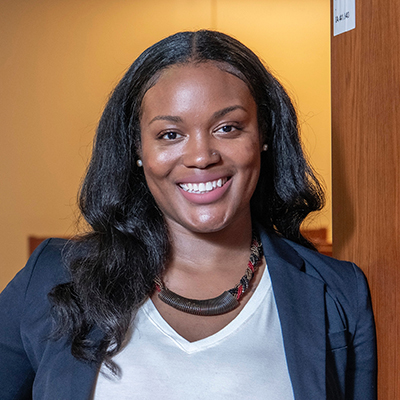
Assistant Professor of Sociology and Environmental Studies
Morrissey College of Arts and Sciences

Associate Professor of the Practice
Connell School of Nursing
2025-2026 Recipients
- Julia DeVoy, Associate Dean of Undergraduate Students and Programs, Lynch School of Education and Human Development, Testimonial
- Beth McNutt-Clarke, Associate Professor of the Practice, Connell School of Nursing, Testimonial
- Josh Seim, Associate Professor of Sociology, Morrissey College of Arts and Sciences, Testimonial
- Conevery Bolton Valencius, Professor of History, Morrissey College of Arts and Sciences, Testimonial
Faculty Newsletters
Take a look at some of our past faculty newsletters. Reach out to Rachel Greenberg at r.greenberg@bc.edu with any questions.
Career Center Faculty Update May 2026
Highlights Include: Current Opportunities for Faculty Partnership, How AI is Changing the Workplace, Key Dates for 2026-2027, and more.
Career Center Faculty Update January 2026
Highlights Include: Most Common Questions of Fall 2025, Integrative Learning Faculty Grants, Employer Perspectives, and more.
Career Center Faculty Update August 2025
Highlights Include: Recent Graduate Outcome Data, Navigating the AI-Driven Workforce, Faculty Discussions, and more.
The Career Center offers a wide range of resources for students at every class level and at every stage of their career discernment and planning. For a full list of our resources, please visit our Programs & Resources page. If you have any questions or are seeking consultation, feel free to contact a staff member.
Boston College’s First Destinations dashboard provides an interactive platform where you can explore what graduates from your specific school or major go on to do immediately after they graduate. Simply filter by your school and department and you will be able to see the percentage of students who went directly into employment, graduate school, service or fellowships. Reach out to a member of the Career Center team with questions or for assistance using the dashboard.
We ensure students discover opportunities across both the visible and "hidden" job markets. We start by directing students to Handshake, which hosts internships and jobs specifically targeted at our students. After Handshake, we encourage them to explore industry-specific job boards and professional association websites, which are curated and linked on our career cluster webpages. Finally, we strongly emphasize networking, encouraging students to leverage their personal contacts, faculty, and especially our alumni network via Eagle Exchange. Connecting with the alumni network helps students learn how jobs and internships are posted in specific industries, potentially leading to referrals and uncovering roles in the "hidden job market."
There are some key skills that employers across all industries are seeking in entry level hires. These include skills like written and verbal communication, leadership, teamwork, critical thinking, and others that are developed through academic and co-curricular experiences. See the full list of these critical skills, as well as sample behaviors for each. If you’re interested in talking with a Career Center staff member about how you help students connect their classroom learning to these skills, please contact a member of our team.
In addition to the subject matter knowledge they are gaining, students develop many transferable skills in the classroom. However, they often don’t recognize all they are learning, which means they aren’t able to articulate their many skills. You can help students recognize and articulate their skills by:
- Adding information to your syllabus about the skills that will be gained in your class.
- Asking students (as a group or individually) to provide examples of where they have gained each of these key skills.
- Have students complete the Reflecting on Career Readiness worksheet in the ‘Faculty & Staff Career Toolkit’.
If you have questions or want to talk with a Career Center staff member about these or other ideas, please contact a member of our team.
The Center for Teaching Excellence website includes sample syllabus statements that will help you think about how to include the skills students will gain in your class.
There are faculty members from across the university doing great work to support students’ career readiness through class assignments, academic advising discussions, guest speakers, and more. You can find several project descriptions for the faculty who participated in the Integrative Learning Working Group (2023-2024) to see some examples.
The Center for Teaching Excellence has resources to help you get started with assignment design.
Our faculty and staff have diverse networks of contacts, and we invite your collaboration as we seek to increase opportunities for our students. If you have a contact in any industry that is (or might be) interested in posting internships or jobs to recruit BC talent, supporting career educational efforts, or raising their visibility on campus, please complete this brief referral form and our Employer Engagement team will follow-up with them. Alternatively, you can forward or add us to an email with your contact to make an introduction.
The Eagle Exchange platform fosters connections with the Boston College community. Students can use Eagle Exchange to connect with alumni in order to build their professional network, ask career-related questions, and find mentors. Faculty and staff can use Eagle Exchange to reconnect with past students, identify and invite alumni speakers, or to connect students with BC alumni.
Yes, our team is available to facilitate interactive workshops for your class during a full class session or to provide a brief (~10 minutes) overview of our services and resources. Request a Career Center class visit.
“ I’ve partnered with the Career Center to host a workshop for my first-year students, and the staff consistently excels at demonstrating how a liberal arts education equips students with essential workplace skills. I also value the evidence they present to help students understand that their major doesn’t have to directly dictate their career path. The feedback from students has always been overwhelmingly positive, and it’s an excellent opportunity to familiarize them with the wide range of services available early in their academic journey. ”
Our services are available to all Boston College undergraduate and graduate students, except for those enrolled in BC Law, the Carroll Graduate School of Management, or any non-degree programs.
International students have multiple potential career paths after graduation, though options are primarily governed by visa regulations. The most common and immediate path is Optional Practical Training (OPT), which grants F-1 students 12 months (or 36 months for STEM majors) of temporary work authorization in their field of study. For long-term employment, securing an employer-sponsored work visa (H-1B) is typically required, though many students also find success utilizing their U.S. degree and experience in highly-valued roles back in their home country. We strongly recommend that international students consult with the Office of International Students and Scholars (OISS) to understand visa regulations, while the Career Center assists with career exploration and job search strategy.
Yes, we encourage faculty to get their own Handshake account. Doing so allows you to better advise your students and connect them with opportunities. To access Handshake, visit bc.edu/handshake and use your Agora log-in credentials to sign-in. Complete your profile as if you were a student with the school year, school, major, etc. that best positions you to experience Handshake as one of your students.