

Wound Care
Fundamentals ∙ Advanced ∙ Palliative

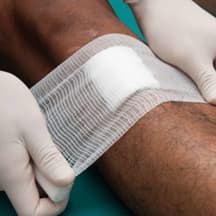

Essential wound care nursing skills include assessing the wound, proper
cleansing and dressing, aseptic technique, and patient education.
Nurses must be able to assess tissue condition, wound size, and signs of infection, and choose and apply various dressings, while also
managing pain and preventing complications.
Gain these skills and more at the courses listed below.
Fundamentals of Wound Care
This course provides a comprehensive overview of wound care,
focusing on the characteristics and treatment approaches for various types
of wounds, including surgical wounds, burns, arterial and
venous ulcers, diabetic foot ulcers, and pressure injuries.
Saturday, September 12, 2026
9:00 AM - 3:30 PM
Learning Outcomes
Following this course, participants will evidence increased knowledge by demonstrating:
- Thorough wound assessments
- Identification of infection signs and symptoms
- Accurate documentation of wound characteristics
- Safe practice for all aspects of wound management
The course also covers pressure injury prevention and staging, including the assessment of darkly pigmented skin. Hands-on practice will be provided for wound cleansing, dressing selection, and deep wound packing.
Target Audience
Ideal for all nurses/clinicians who are motivated to learn the latest evidence-informed practices in fundamental wound assessment and management.
Advanced Wound Care
Designed to equip nurses and clinicians with the skills needed to handle
more complex wound care scenarios, the course includes advanced wound care
concepts and techniques, including vacuum-assisted closure (VAC)
dressings and compression bandaging for venous leg ulcers.
Advanced wound care products will be discussed,
including cellular skin substitutes (e.g. Dermagraft ® and Apligraf ®).
Participants will receive tips and tricks with hands-on practice,
including VAC dressing application and removal,
compression bandaging, and surgical staple removal.
Saturday, October 24, 2026
9:00 AM - 3:30 PM
Learning Outcomes
Following this course, participants will evidence increased knowledge by demonstrating:
- Cell-based wound dressings/living skin substitutes
- Negative pressure wound therapy
- Best practices and tips for using vacuum assisted closure therapy, applying compression bandaging and surgical staple removal
Target Audience
Perfect for nurses and clinicians interested in mastering advanced wound care techniques, including negative pressure therapy dressing changes, unna boots and 4-layer compression wraps. This course is especially beneficial for those who will serve as wound care champions or unit resources, and/or who will be performing complex dressings, including negative pressure wound management for deep wounds, compression bandaging for venous leg ulcers, and surgical staple removal.
Palliative Wound Care
Offered for clinicians seeking skills to provide a person and
family-centered, holistic approach to managing wounds that
prioritizes comfort, dignity, and quality of life over complete healing.
It applies to a range of wounds, healable or not, when curative treatment
is not working or is too burdensome for the patient.
Saturday, December 5, 2026
9:00 AM - 3:30 PM
Wounds managed with a palliative approach can include:
- Malignant or fungating wounds (related to cancer infiltration)
- Pressure injuries
- Vascular ulcers
- Terminal tissue injury
Learning Outcomes
Following this course, learners will have increased knowledge of palliative care wound management using principles and strategies to align care with the patients’ and family’s goals, including
- Symptom Management: The cornerstone of care is a comprehensive assessment and management of symptoms
- Wound and Skin Care: The focus is on protection and hygiene.
- Holistic Support: Care extends beyond the physical wound.
Target Audience
Ideal for all nurses/clinicians who are motivated to learn the latest evidence-informed practices in fundamental wound assessment and management.
Instructor

Beth McNutt-Clarke, D.N.P., M.B.A., RN, CWOCN, is an assistant professor of the practice at the Connell School of Nursing. She is an advanced practice nurse who specializes in pressure injury prevention and wound management. McNutt-Clarke has been an educator for over two decades, having taught primary health care and population health nursing at the University of Pennsylvania, Villanova University and the University of Toronto before coming to Boston College. In addition to her nursing credentials, she also holds an M.B.A. from Concordia University in Montreal, Quebec.
Education
B.Sc., McGill University
M.Sc.(A.), McGill University
M.B.A., Concordia University
WOCNEP, LaSalle University
D.N.P., Boston College
Research Interests
Wound, ostomy, continence care across the continuum; health promotion; home care; fall prevention in older adults
Selected Appointments and awards
2023: Award for Excellence in Clinical Education and Mentorship, Boston College; Mentorship Award, Sigma Theta Tau
2022: Award for Excellence in Teaching and Clinical Practice, Boston College; Spirit of Sigma Award, Sigma Theta Tau
2021: Award for Excellence in Clinical Education and Mentorship, Boston College
2020: Award for Excellence in Clinical Education and Mentorship, Boston College
2019: Award for Excellence in Clinical Teaching, Boston College
2018: Award for Excellence in Clinical Teaching, Boston College
2017: Award for Excellence in Clinical Teaching, Boston College
2016: Award for Excellence in Clinical Teaching, Boston College