


University pilots interprofessional palliative care course
Palliative care—which focuses on providing seriously ill persons with relief from symptoms, pain, and illness-related stress—is already a desperately needed resource in the United States, and experts at Boston College and elsewhere say that’s not going to change anytime soon.
Some 12 million adults and 400,000 children need, or could benefit from, palliative care, according to the Center to Advance Palliative Care, which notes that those numbers are likely to double by 2050. Because this type of care involves a holistic approach, the need for professionals who can provide it—not only doctors but nurses, social workers, and spiritual care professionals/chaplains—will be critical.
A pilot course offered last spring at Boston College could be a model for fostering the interdisciplinary and interprofessional collaboration which animates palliative care. Titled the Interprofessional Palliative Care Learning Community, the 15-week non-credit, masters-level course was designed by faculty and graduate students in the Connell School of Nursing, BC School of Social Work, and Clough School of Theology and Ministry, combining asynchronous online modules with three synchronous/live sessions via Zoom.
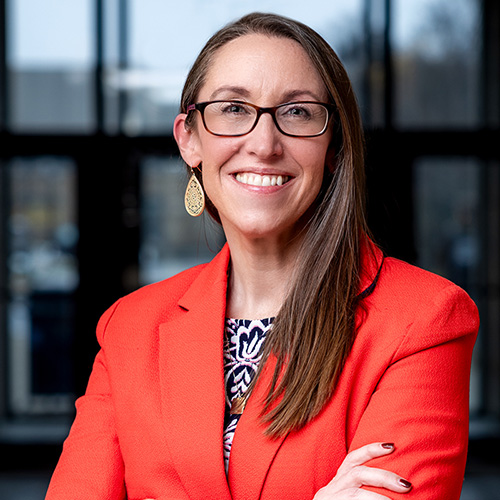
BC School of Social Work Associate Professor Christina Matz (Caitlin Cunningham)
“Palliative care is more important than ever, but there’s often a misunderstanding of what it is and how it works,” said BCSSW Associate Professor Christina Matz, a co-leader of the pilot. “Our goal is to help social work, nursing, and theology and ministry students understand the philosophy of palliative care, and how we can use our respective skills and backgrounds in concert with one another to support patients and their loved ones.”
The Learning Community curriculum integrated case studies, reflective practice, and peer learning to support culturally responsive team-based care, with an emphasis on collaborative communication, ethical decision making, and person-centered approaches to serious illness. Among the topics covered were Advance Care Planning; Pain and Symptom Management; Spiritual and Cultural Care; Care Near the End of Life; Ethical, Legal, and Financial Issues; Pregnancy and Infant Loss; and Dementia and Pediatric Palliative Care.
Matz said the level of interest the course generated—51 applicants from across the three schools—and the commitment shown by the participating students was impressive.
“The core group of about 20 were fully engaged, just as if it was a three-credit course, and provided us with some excellent feedback and observations,” said Matz, who partnered with Connell School Associate Professor Patricia Tabloski and Innessa Manning, BCSSW project manager for the Interdisciplinary Palliative Care Initiative; Melissa Kelley, an associate professor of pastoral care and counseling at the Clough School, also contributed to the initiative. Initial development of the course was funded by the Spier Family Foundation.
Even though the Learning Community was non-credit, one BCSSW student participant found it valuable in applying for medical social work roles: “I was able to demonstrate an understanding for the role solely due to taking this class,” wrote the student in an evaluation. “I received offers at all the hospitals I applied to, which was evidence that this class is comprehensive.”

Connell School of Nursing Associate Professor Patricia Tabloski (Caitlin Cunningham)
One key facet of the course involved simulated cases on which students worked in teams: Each member received an individual briefing on the fictional patient that accorded with his or her discipline, then met with the other members to discuss the case and what steps should be taken.
“You can’t do anything in palliative care without a team,” said Tabloski, who has had extensive nursing experience working in palliative care. “You must learn not to try to be the wisest person in the room who has all the answers, because sometimes we must rely on our team for the needed support and guidance to move forward to meet patients’ goals of care.”
Learning Community participants found this to be overwhelmingly true.
“Working on the care plan with the team was so useful because I realized that I had information about the patient from the [briefing] that they did not,” reported one student. “It made me realize how important it is to communicate and collaborate with the team and not assume that they know the same information that I do as a social worker.”
A student tasked with spiritual care for the patient had a similar experience from the opposite perspective: “[It] was very realistic and eye opening to talk with people from other disciplines who had information that I didn’t receive. It was good practice to communicate well and advocate for the patient’s needs that we observed.”
Tabloski calls this the “two-plus-two equals five effect: You say your piece, I say mine, and someone else says ‘Wait a minute, did you think about this?’” In fact, one of the case study videos used for the Learning Community showed a former student of Tabloski disagreeing with her about the care options for a patient.
“I remember for a second I was taken aback,” said Tabloski, “but then my training and education kicked in and I said, ‘You know, you’re right. I never considered your point of view. But now that you said that, it makes a lot of sense.’ It’s important to have this behavioral model of people who can listen critically and respectfully disagree.”
Tabloski emphasized the importance of palliative care’s interdisciplinary approach, not least its spiritual dimension. “I have had so many patients ask, ‘Why is God punishing me? I did everything right. I raised my kids in the religion. I gave money to the church. Why can’t God punish someone else?’ At first, I was terrified because I was so afraid to say the wrong thing. But having a priest, a minister, rabbi, shaman, and so on as part of the team helps you be honest with your patient, and to say, ‘I can’t answer that question, but it sounds like you really need to have a conversation with someone who knows more about this than I do.’”
Matz said that the student evaluations will help provide a basis for modifying elements of the course in anticipation of offering it again in the spring, perhaps this time for credit; CSON plans to develop an on-line continuing education offering for practicing nurses. Discussions among the three participating schools about administering the class will continue, she added.