

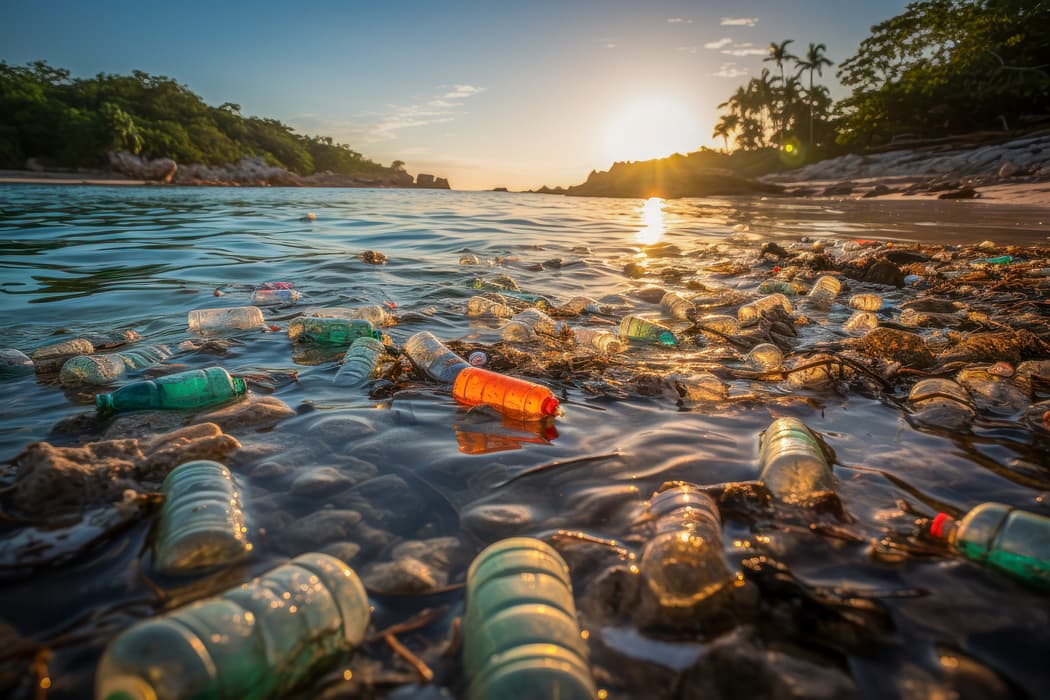
Global summit addresses plastic pollution crisis
An international summit in Ireland convened by Professor of Biology Philip J. Landrigan, M.D., director of the University's Global Observatory on Planetary Health, addressed the growing global health crisis caused by plastic production and pollution, a focus of the work by Landrigan and the Observatory.
The three-day event at Boston College Ireland brought together experts from Europe, the U.K., Australia, and beyond to advance the "Lancet Countdown on Health and Plastics." The program, co-led by Landrigan and Heidelberg University’s Joacim Rocklöv, launched a year ago to develop research-based approaches to reducing the use of plastics and curbing plastic pollution.

Philip J. Landrigan, M.D. (Gary Wayne Gilbert)
“We put together a roadmap about how bad the plastic problem is so we can begin to go about fixing it,” said Landrigan.
The project, funded by Australia’s Minderoo Foundation and the Scientific Center of Monaco, will publish updates in The Lancet every 12 to 24 months, he said. These reports will track metrics such as plastic production, chemical levels in human bodies, and the environmental accumulation of microplastics.
Plastics have increasingly become a public health concern as microplastic particles and associated chemicals infiltrate food and water supplies. Research has linked chemicals like bisphenols to liver issues and heart disease, while flame retardants have been shown to reduce IQ.
“Nobody has mapped how many deaths each year are caused by plastics,” Landrigan noted, emphasizing the need for comprehensive data on plastic waste from production to disposal.