

Behind the unrest in Iran
Since late December, demonstrations have erupted throughout the Islamic Republic of Iran, motivated in part by socioeconomic demands, the collapse of the rial currency, and the economy’s struggles resulting from international sanctions over its nuclear program. Iranians have publicly demonstrated repeatedly in the past to protest their authoritarian government, but the current dissent appears to be the most widespread ever among the nation’s 90 million people.
As in previous crackdowns, security forces have responded with riot police, tear gas, and live ammunition. Hundreds, if not thousands, of protesters have been killed, and those arrested have been threatened with death. Meanwhile, demonstrators’ demands shifted from economic relief to increasingly explicit calls for the overthrow of Iran’s theocratic regime, led by 86-year-old Ayatollah Ali Khamenei. Although some observers initially speculated that the Islamic Republic might be approaching a tipping point, the state’s response has underscored its continued capacity and willingness to repress dissent. Regional and world leaders are now grappling not only with the trajectory of unrest, but the broader consequences of sustained instability in Iran, which could reshape regional geopolitics and global energy markets.
Office of University Communications Associate Director Phil Gloudemans spoke with Associate Professor of Sociology and International Studies Mohammad Ali Kadivar—currently the Maury Green Fellow at the Harvard Radcliffe Institute for Advanced Study—whose research emanates from his experience as a participant-observer of the pro-democracy movement in Iran, for a Q&A in the Boston College Chronicle.
Iran pundits immediately asserted that the protests are primarily driven by economic deprivation. Are there other factors that have contributed to and fueled the ongoing demonstrations?
Yes, the immediate trigger for the recent protests was the sharp devaluation of Iran’s currency, which occurred in the context of years of high inflation, driven by a combination of crippling United States sanctions on Iran’s economy and increasing mismanagement and corruption within the Islamic Republic.
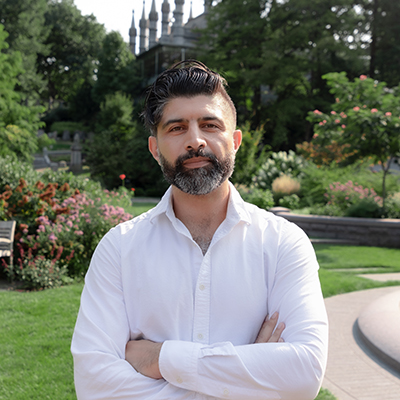
Associate Professor of Sociology and International Studies Mohammad Ali Kadivar
However, economic hardship alone does not typically produce calls for regime change. The deeper cause here is political blockage: growing repression, authoritarianism, and the absence of meaningful channels for political participation. Many Iranians now link economic hardship directly to political decisions—especially foreign policy—over which ordinary citizens have almost no influence.
With the electorate effectively powerless to shape those policies, economic grievances increasingly escalate into political demands directed at the regime itself.
Were the protests organized by a single group?
No. Similar to previous waves of anti-regime protests in Iran, these demonstrations were largely leaderless and lacked formal organizational structures. The initial protests and strikes began in Tehran’s Grand Bazaar, likely organized through merchant networks. But they quickly spread to other cities and social groups. The diversity of slogans and demands clearly indicates that protesters hold different visions for Iran’s future.
Political sociologists call this a “negative coalition,” i.e., unity around what people reject—in this case, the Islamic Republic—with disagreement over what comes next. Opposition to the regime was clear, but competing visions of the post–Islamic Republic order remain contested both among protesters and within Iranian political society.
This dynamic is not unique to Iran. It has been a common feature of urban revolutionary uprisings over the past several decades, including in Ukraine, Egypt, and Tunisia.
Initially, the Iranian government’s response was restrained, but recently the death toll from the crackdown has climbed sharply. Does the U.S. hold the key to ending the regime’s repression?
U.S. policy does affect the context in which repression unfolds in Iran, but not in the straightforward way this question suggests. First and foremost, the Iranian government bears primary responsibility for the mass killing of protesters. The scale of state violence has been unprecedented, and there is no excuse for it.
At the same time, it is difficult to credibly pressure other governments to curb repression when it’s also expanding at home. When the U.S. normalizes coercive practices domestically—especially toward immigrants and political dissent—it undermines its moral authority and weakens the international human rights framework it claims to defend.
Over the past several years, U.S. foreign policy has also weakened rule-based international frameworks by disregarding international institutions and legal processes, including the United Nations system, human rights bodies, and international courts. When international norms and enforcement mechanisms are undermined by powerful states, it becomes far harder to hold governments like Iran accountable for mass violence.
In addition, years of economic, political, and military pressure, combined with recent U.S. and Israeli military actions and threats, have raised the stakes for Iranian authorities. Statements by U.S. and Israeli officials suggesting foreign involvement in the protests have also provided the regime with a convenient justification for intensified repression.
The most constructive role the U.S. can play is not military intervention. History—from Iraq and Afghanistan to Libya and Syria—shows that military action tends to escalate violence, destabilize societies, and undermine prospects for democratic outcomes. Instead, the U.S. can help by consistently upholding international law, strengthening multilateral institutions, and supporting independent human rights monitoring and accountability mechanisms.
Is a return to monarchy in Iran nostalgia, or a realistic possibility?
Chants in support of monarchy have been heard during this protest wave, but they do not represent the views of all protesters. Monarchist appeal has grown for several reasons, which I analyze in more detail on my Substack, Popular Politics, Unbound [alikadivar.substack.com/]. At the same time, significant segments of Iranian political society firmly oppose replacing the Islamic Republic with another form of authoritarian rule.
What has changed is that monarchism has become a more prominent and organized current within the opposition than in previous protest cycles. That said, a return to monarchy remains far from inevitable.
As in many countries facing revolutionary upheaval, a crucial mechanism shaping Iran’s future trajectory is the position of the security apparatus. Throughout its life, the Islamic Republic has maintained both the will and capacity to repress protests, including through lethal force. Any plausible future scenario has to be analyzed with that reality in mind.
Given this, several outcomes currently appear more likely than a straightforward transition: continuation of a weakened but increasingly violent Islamic Republic, marked by recurring cycles of anti-regime protest; limited internal reconfigurations designed to ensure regime survival; or in the most destabilizing scenario, external military intervention—whose regional precedents suggest consequences that would be catastrophic rather than democratic.