

Wong/Lai Family Fellowship
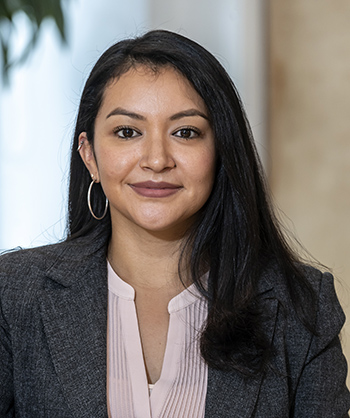
Boston College School of Social Work Associate Professor María Fernanda Piñeros-Leaño, whose research focuses on health and mental health inequities among Latin American migrant and immigrant families, has been awarded the inaugural Anita Wong and Wilson Lai Family Fellowship.
The three-year fellowship was created to advance faculty excellence in research and teaching in the BCSSW, fostering scholarship that improves youth mental health and promotes environmental sustainability worldwide. By supporting faculty with a demonstrated commitment to community-engaged research and impactful teaching, the fellowship seeks to address pressing global challenges and strengthen the school’s role as a leader in social innovation and justice.
Its namesakes are Anita Wong, a 1997 graduate of the Carroll School of Management, and her husband, Wilson Lai. Both are former chief executives of Hollyland Group Holdings Limited—Wong served as chair and director, Lai as president. Hollyland Electronics Technology is one of the leading circuitry protector manufacturers and solution providers in the Asia Pacific region.
A faculty member since 2018, Piñeros-Leaño said the fellowship provides “critical resources that allow me to deepen and expand my work. The annual financial support offers flexibility to cover research-related expenses such as data collection, hiring research assistants, and disseminating findings to academic and community audiences. These funds also make it possible to integrate cutting-edge research into my courses, enriching the learning experience for students and preparing them to address mental health disparities among vulnerable populations.
“In a nutshell, the fellowship enables me to sustain community-engaged research, pursue innovative methodologies, and create a stronger bridge between research and teaching.”
Piñeros-Leaño is principal investigator of the MACONDO (Mothers and Children of All Nations Defying the Odds) Research Team, which aims to address health and mental health disparities among families to ensure a healthy development “for everyone, regardless of where they are from.”
With a staff that includes BC graduate and undergraduate students, as well as collaborators from five other universities—who work in disciplines such as economics, public health, nursing, and behavioral health—MACONDO aids immigrant and migrant families who have encountered several adversities prior to migrating to another country or city and who continue facing difficult experiences after arriving.
Using empirical research, the team seeks to “ameliorate barriers to access care and to promote the use of evidence-based interventions that can promote the well-being of immigrant and migrant families in the host country.”
The Wong/Lai Family Fellowship will enable Piñeros-Leaño to strengthen community partnerships in the Boston area to advance her research on maternal mental health inequities among immigrant families: “I’ll be able to deepen collaborations with local organizations and community leaders, ensuring that the research is grounded in the lived experiences of immigrant mothers and that the interventions developed are culturally responsive.”
Piñeros-Leaño added that the fellowship can help BCSSW become a leader in mental health equity and environmental sustainability and could set a precedent for future philanthropic investments while fostering a culture of community-engaged research.
“It can also aid in building a legacy of impactful work that aligns with BCSSW’s mission of service and social justice, positioning the school as a global leader in addressing complex social challenges.”
BCSSW’s Latinx Leadership Initiative was the major factor in Piñeros-Leaño’s decision to join the faculty in 2018. “LLI’s mission—preparing social workers to serve Latinx communities in culturally and linguistically responsive ways—deeply resonated with my commitment to mental health equity and inclusion in social work education.”
One of the most compelling findings in her research thus far is a persistent gap in access to culturally and linguistically appropriate mental health services, said Piñeros-Leaño, who identifies structural barriers such as immigration status, economic insecurity, and the lack of linguistically trained providers, which exacerbate these inequities.
“To address these issues, it is necessary to partner with community members to develop community-based interventions that center the voices of these families.”
Other rewarding aspects of her tenure at BCSSW have included mentoring undergraduate and graduate students “who are deeply committed to social justice and eager to make meaningful contributions to social work practice.
“I also greatly value the collaborative environment at Boston College, which has allowed me to work across departments on initiatives that advance our shared mission of equity and inclusion.”