

Palliative care research project
Joan (not her real name) is a single mother whose pre-teen son Bob suffers from a serious chronic disease that often keeps him bed-ridden and unable to pursue activities like attending school or socializing with friends. She has to frequently change her work schedule so she can stay with Bob, or have a friend, neighbor, or family member do so while she is at her job.
It’s a very stressful situation, one which she says is simply untenable, and difficult for others to understand—including some in the medical profession.
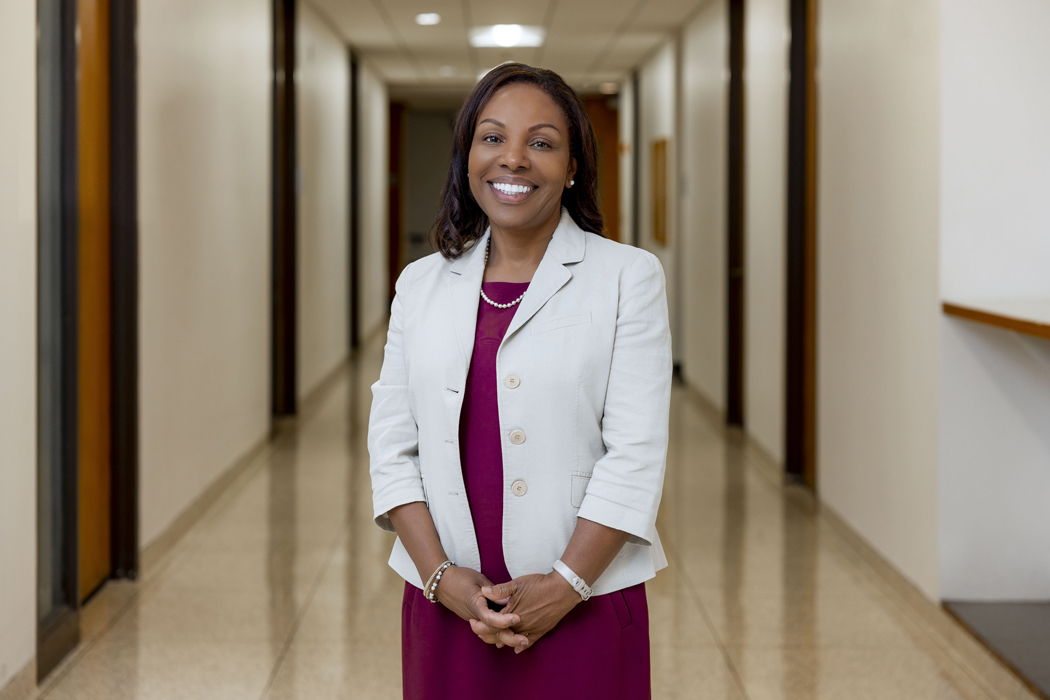
But Joan now has an opportunity to share her first-hand perspective in a setting that could lead to meaningful changes for her and individuals and families dealing with similar challenges: She is a member of the Lived Experience Action Panel (LEAP), part of a major National Institutes of Health-funded initiative directed by Boston College School of Social Work faculty member Karen Bullock.
The NIH awarded a $64 million grant to establish the Advancing the Science of Palliative Care Research across the Lifespan (ASCENT) consortium, for which Bullock, the Louise McMahon Ahearn Endowed Professor at BCSSW, will serve as a co-investigator. ASCENT provides resources, expertise, and coordination among institutions to advance innovative, high-quality research for those living with serious illness and those who care for them.
Bullock’s specific task is to oversee LEAP, which is part of the Research and Community Engagement Core, one of seven sub-sections (cores) in ASCENT. Among other undertakings, LEAP will compile and disseminate resources on health disparities and community-engaged research, and train and mentor palliative care scientists in these areas. The panel includes both seriously ill persons and caregivers, who provide a vital perspective in the nationwide struggle to improve the quality of and access to palliative care.
“There is a great need to train the next generation of researchers in hospice and palliative care, so as to help recruit and prepare a workforce that will be able to provide that care,” said Bullock, a member of the BC Global Public Health and the Common Good program faculty.
As LEAP’s director, Bullock has personally recruited the panelists to share their experiences and offer suggestions for improving care.
“I met with every person via Zoom to get LEAP up and running,” she said. “We wanted to be sure we had a diversity of voices and experiences for the panel, so our panelists—who represent different regions of the country—include parents who are caring for young children or teenagers; older people caring for a spouse, partner, or family member; young adults coping with serious illnesses—almost every possible scenario. I listened to their stories and asked about their needs, and I talked with them about the opportunity LEAP represents for making their lives better.”
“ As social workers, we are out in the community and so we understand advocacy and the ways to provide it. You have to understand the delicacy in engaging people on sensitive matters and use your skills and expertise to get an effective understanding of their situation—and what needs to be done to resolve it. ”
LEAP will have an especially critical role in the consortium, she pointed out, in that its proceedings and findings will be shared across the other six ASCENT cores. The consortium includes principal investigators from schools of medicine at Columbia, New York, and Duke universities, the University of Pennsylvania, Mt. Sinai Hospital, and the Children’s Hospital of Philadelphia, as well as 40 key personnel from more than 20 institutions, representing the interdisciplinary approach that is integral to palliative care.
These scientists will develop a national scientific infrastructure and community to advance palliative care research; create new research knowledge and research methodologies; foster career development and impact of the palliative care workforce; and disseminate palliative care research findings and facilitate their implementation.
Bullock—the 2024 Richard Payne Outstanding Achievement in Diversity, Equity, and Inclusion Award winner selected by the American Academy of Hospice and Palliative Medicine—has expertise in health disparities, health equity, serious illness care, aging and gerontology, hospice, palliative, and end-of-life care decision making. These proficiencies ably complement her social work background, which is valuable in of itself in addressing issues related to palliative care.
“As social workers, we are out in the community and so we understand advocacy and the ways to provide it,” she explained. “You have to understand the delicacy in engaging people on sensitive matters and use your skills and expertise to get an effective understanding of their situation—and what needs to be done to resolve it.”
Serving on LEAP is a major commitment for the panelists, who must attend meetings via Zoom over a two-year period, noted Bullock. She also has had to provide them with a crash course in how scientific meetings are conducted, and various facets of the scientific method like abstracts and scientific reviews.
LEAP’s membership also includes what is called a Learned Experience Action Panel, consisting of hospice and palliative care administrators and staff, she said. Their insights, while not exactly like that of the Lived Experience members, are valuable nonetheless.
“It’s empowering for those who are Lived Experience to be grouped with those who are Learned Experience, and vice versa. People who work in palliative care settings certainly are aware of the needs and challenges that patients and their families cope with, but don’t know what it’s like for someone to face these on a day-in, day-out basis. At the same time, patients and families can get a sense of how these professionals see the situation. Serving on the panel together creates the potential for some very beneficial cross-pollination.”
For more about the ASCENT Consortium, see ascentpalliativecare.org.