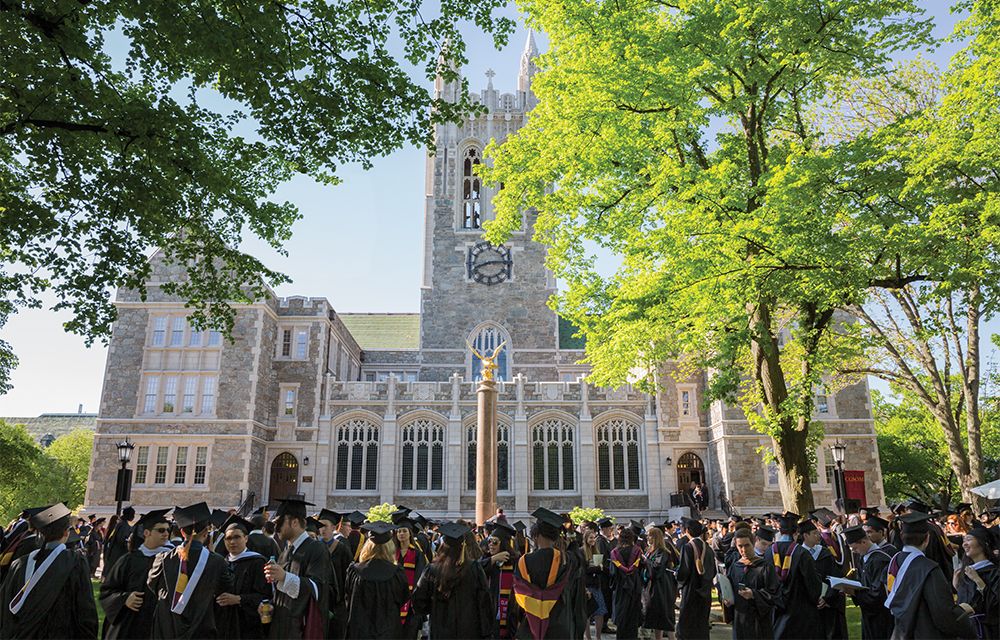
Convocation at Virginia Tech
One Day after Shootings
April 17, 2007, Tuesday
New England Cable News (NECN) (#1 of 3)
R. D. Saul Report
160 Wells Avenue
Newton, MA 02459
2:00 PM to 3:30 PM
Interview #1 was a voice-over during the convocation at Virginia Polytechnic Institute and State University, Blacksburg, VA, and ran one and one-half hours. The Convocation ran approximately from 2:20 to 3:20 PM.
UNEDITED TRANSCRIPT
S: R. D. Saul, NECN
T: J. J. Tecce, Boston College
S: ... two of the 32 who died yesterday. And we are learning more about the shooter in this case--23-year-old Cho Seung-Hui from Centerville, VA, just outside Washington, DC, near Dulles Airport. Being described today as a loner. We're told that he has been referred to counselors on campus because of the nature of some of his writings in the Creative Writing Course. They are not further described. A neighbor of the family in VA said that when people would say hello to him, he would walk by without response. He is the man believed responsible for the shootings now, both the two killed in the dormitory yesterday morning, followed by the 30 others in the Norris building across campus.
Joining me this afternoon is Professor Joe Tecce from Boston College. And, Joe, thank you for spending a bit of time with us. Joe Tecce is a psychologist who is an expert on grief and stress. We're going to talk a little bit about what is going on with these students, with these staff members at Virginia Tech. We can go back to the pictures at the Coliseum as we wait for the beginning of the Convocation.
What's the role of a ceremony like this? I don't know if it helps heal in any way, but perhaps helps understanding what happened.
T: Here we have a very important need in the short term to get people over a bad bad period. It's less cerebral, less brainy than it is just emotional support. And a group getting together, talking about this, can give that kind of emotional support by saying "You're part of a larger picture. Don't feel alone. Don't feel abandoned. We are all with you as a large family."
And that is part of the reason why people get together. At Boston College, President Leahy sent a letter this morning with those components. He said, in effect, "Remember, Virginia Tech, we are with you as another college. We are praying for you. We have spiritual exercises today. And we are having counseling available for our students."
S: The President of the United States will be at this Convocation today, which also speaks to the nature of what you're talking about. What happened here is larger than Blacksburg, VA.
T: Exactly. And, of course, it's not the first time it's happened. We had this situation in 1966 with Charles Whitman, who did a similar thing. And, therefore, people will always worry--well how about the next one that's going to happen? And there is a need at this time to say, "Let's concentrate on the present. Let's have everyone get their emotions out on the table. Let's not be super-intelligent at this point. Let's just be emotionally supportive and meet the needs of people who are trying to get over a bad period."
S: The college is also providing counseling services for staff, faculty, and students... What can a counselor possibly say to someone who has survived a horrendous incident like this?
T: One of the things that happens to somebody who survives is they feel guilty. There is a strange guilt here, "Why did I survive?"
S: Why did I make it when ... the person next to me didn't.
T: Exactly. "Why am I here? Do I deserve to be here?" And therefore, the worthwhileness of the individual should be beefed up. The counselor should say, "Look, there's nothing you could have done, you're a good person, you can best serve this person who died by living out his or her ideals." And always be a little bit proactive and try and help that person through.
S: At one level, you make it sound like a very gut level approach. This is not an intellectual approach ... understanding what happened here ...
T: Exactly. It's primitive--the animal emotions are coming forth in the victims. Therefore, it's at that level of animal emotion that you want to help these people out. They're not listening to arguments and logic and reasonableness. They're in shock. They're in grief. And that's the level at which you hit it. You hug them, you hold their hand, you cry with them, you let them bang their head against the wall--as long as they don't hurt their head, and make a hole in the wall. But they have a need to really act out some primitive, basic impulses--in the short term. In the long term, it's a little different story.
S: And this may not be a one-hour or a one-day or a one-week process.
T: That's right. And just getting to that long term--it's a different story. Then the analysis begins. Then the reality testing begins. Then you'll be in relabeling things and say, "Well look--it wasn't your fault. Let's look ahead." And as I said before, try to honor that person by living out the ideals they would have had ...
S: There is also in addition to the people, the faces, the names associated with this--real estate involved here. By that I mean the dormitory where the first two shootings occurred yesterday, and then Norris Hall, the classroom building, where 30 people plus the gunman died yesterday. We know that Norris Hall has been closed for the remainder of the semester, remains an active crime scene today, and probably will for some time. But what can you do about those buildings that are so associated with what happened here--in the hearts and lives of the people who lived through it?
T: You put your finger on a very important psychological phenomenon, namely, that where a trauma occurs gets embedded in the mind with those cues in that environment that caused it. And, therefore, sometimes it's useful to get people to get away from that situation totally in the short term. So that they don't revisit that trauma. And then, I would say, refurbish those buildings so they don't even look like what they used to ...
S: We're actually looking at a map of the campus. This is a sizable campus, about 2,600 acres, 26,000 students, Ambler Johnston Hall, toward the bottom of your screen was the dormitory where the first two shootings occurred yesterday morning, just after 7 o'clock and then the others at Norris Hall, basically a large classroom building. This, dorm, houses almost 900 people. The convocation that we'll be watching as it unfolds this afternoon is just a little to the left of Ambler Johnston Hall and it's part of the athletic field and complex at Virginia Tech. It's not going to be easy and I suppose ... they'll be able to make some arrangements for the rest of the semester. But back to that classroom, this involved at least four classrooms in this building and a stairwell. So it's a good portion of the building that has been directly impacted by what happened here. Do you close it down? Do you knock it down? Do you change it?
T: First, get the victims out of the combat zone. Short term, get 'em out of there. In the long term, perhaps they could refurbish--perhaps they could redecorate. Then, little by little, once people are over this short-term trauma, they can go back and revisit it, almost as a shrine, in a way, and pay their respects. So, I think that the solutions can be divided into short term and long term here. And, it's up to the university what they're going to do in the short term--get them out of there, because those cues will bring all that trauma each time someone is visually presented with it.
S: Coming up on ten minutes after two, you're looking at live pictures from the Castle Coliseum at Virginia Tech in Blacksburg VA. The convocation involving school officials, President Bush, and Poet Nikki Giovanni, who is a distinguished university professor at Virginia Tech, will be part of this as well. Our guest this afternoon is Professor Joseph Tecce from Boston College, psychologist and expert on stress, fear, grief, and vulnerability. To the victim for a moment. This 23-year-old man, identified as Cho Seung-Hui, from suburban Washington in VA, a resident, legal resident of the United States, born in South Korea, described today as a loner. Apparently some concern on the part of University officials about writings in his creative writing class. He apparently had been referred to counseling on campus--not clear whether he took advantage of that or not. What do you make of what frankly little we know about him at this point?
T: I think what can be said about him can also be said about the other victims and what they're going through with their families And that is--that people are our greatest sources of stress and people are our greatest resources in dealing with stress. This man, this young man, apparently did not have the latter. He did not have many people in his life as resources in dealing with his stress and they built up, and they built up--a kind of Theodore Kaczynski type of thing. And I was going to say with the other folks, as well as him, that people are our greatest sources of stress. He is the source of the stress of all these families that are grieving. Yet, everyone else that is coming to the aid of these families are our great, wonderful, rich resources in dealing with the stress that was caused. So, I think he was missing people relationships. I think he was missing a chance to work through some of his problems and, therefore, they built up and they festered without that feedback--"Hey you're a good guy. You don't have to worry about losing a girlfriend." Or, "You don't have to worry about losing that grade, you're a good guy." No need to go around shooting people if he had that kind of support in his life.
S: What kind of discussion is on your campus, Boston College, about what happened yesterday?
T: I don't know. I have not been in the picture. Just this morning I learned about these things that are happening. But I would guess that again, at the three levels, BC is a Jesuit institution, is spiritually based, so it's going to be involved in spiritual exercises. I would say, two, that the counseling center, I believe, is available now, open-ended, with a hot line for any students who want to go see a counselor, who might identify with the situation. And, three, BC has said: We're grieving for you, we're all part of the university family throughout the United States, and, therefore, we are thinking of you and we are praying for you. So I believe BC has this three-pronged attack, which is the appropriate way to do it.
S: I am the father of a college student and I couldn't help but but watch this unfold yesterday as I'm sure many parents in similar situations watched it, and wonder, and and think to yourself, wait a minute, I send my kid off to college, off to school, with the sense that it is a safe place. I'm feeling a little uncertain about that now. Should I?
T: And it is a safe place. This, from my knowledge, this is the first time this has happened since 1966 on a college campus of this magnitude. Therefore, statistically, it's a safe place, but that's being reasonable, and we just said a minute ago, now is not the time to be reasonable. So you should be a little bit afraid. You should be a little scared. Let it go through you. Bite your finger nails. Crack your knuckles. Not bad. But don't pull your kid out of school. No. But have this gut reaction that, "Oh my gosh, this could have happened to my son or daughter." Nothing wrong with that. Just don't take any action during this period where emotions are driving high. And, in fact, next week, you will say, "Safe place where my child is going to school. I feel a little better about it now, because this isn't going to happen again for a long time, and it hasn't happened for a long time."
S: I don't know if you've had a chance to see any of the statements from the University officials and the University police chief over the last couple of days. Did you find them--if you had been a parent, would you have found them reassuring, informative, inconsistent, troubling, any of the above, none of the above?
T: I haven't heard the statements and so I can't comment directly on it. I do know that those college officials are under a great deal of stress. Being under a great deal of stress, they could be trying to straddle a fence and say, "You know we've got to reassure these people out there, these parents that everything is gonna be ok, but we also have to be careful we don't say something that is going to get us into trouble, and financially liable, and something like that." So I believe whatever statements they're making may not be easy to understand because (a) they're under stress and (b) they're trying to meet all people's needs at the same time.
S: And there's an active police investigation under way as well?
T: And they don't know all the facts--exactly.
S: Well in this Convocation at Castle Coliseum, on the Virginia Tech campus this afternoon, ah you will see some familiar faces, Charles Steger, the President of Virginia Tech who has ah been one of the public faces in explaining what has happened here over the last couple of days, Virginia Governor, Tim Kaine, Timothy Kaine who actually was in Japan on a trade mission, immediately turned around and has returned to VA. There will be, ah, spokespeople from various religious communities on campus, there will be some comment from the dean of students and ah the head of the counseling center on campus, ah for President Bush who has traveled with the First Lady from Washington today, and wrapping it up this afternoon will be Nicky Giovanni, the poet, also a professor at Virginia Tech now, for some years. This is a school that we may not know that much about in New England, but it is a large university, some 26,000 ah students, and ah, well known for it's engineering school, and here now, the President and Mrs. Bush and ah Governor Kane taking their places, and I think we're about to get under way here. It has been, certainly a difficult two days on this campus and probably I think, fair to say, around the nation as this horror, as this tragedy, has unfolded, seemingly in real time ... through some of the cell phone photographs and sound. Let's listen.
Moderator of Convocation: Please remain standing during colors and the playing of the national anthem. [playing of the National Anthem]
Comments by speakers and further commentary by NECN followed the National Anthem.
Governor Timothy Kaine: President Bush is a man who knows deeply that one of the tough but necessary parts of leadership is comfort and consolation in hard times, first as a governor and now as a president. He embraces that aspect of leadership. And what a powerful and positive thing it is for the University today to welcome the President of the United States, President George Bush.
(Applause)
President Bush: Governor, thank you. President Steger, thank you very much. Students and faculty and staff and grieving family members, members of this really extraordinary place. Laura and I have come to Blacksburg today with hearts full of sorrow. This is a day of morning for the Virginia Tech community and it is a day of sadness for our entire nation. We've come to express our sympathy. In this time of anguish, I hope you know that people all over this country are thinking about you and asking God to provide comfort for all who have been affected. Yesterday began like any other day. Students woke up and they grabbed their backpacks and they headed for class. And soon the day took a dark turn, with students and faculty barricading themselves in classrooms and dormitories, confused, terrified, and deeply worried. By the end of the morning, it was the worst day of violence on a college campus in American history. And for many of you here today, it was the worst day of your lives. It's impossible to make sense of such violence and suffering. Those whose lives were taken did nothing to deserve their fate. They were simply in the wrong place at the wrong time. Now they're gone and they leave behind grieving families and grieving classmates and a grieving nation. In such times as this, we look for sources of strength to sustain us. In this moment of loss, you're finding these sources everywhere around you. These sources of strength are in this community--this college community. You have a compassionate and resilient community here at Virginia Tech. Even as yesterday's events were still unfolding, members of this community found each other. You came together in dorm rooms and dining halls and on blogs. One recent graduate wrote this: "I don't know most of you guys, but we're all Hokies, which means we're family. To all of you who are okay, I'm happy for that. For those of you who are in pain or have lost someone close to you, I'm sure you can call on any one of us and have help any time you need it." These sources of strength are with your loved ones. For many of you, your first instinct was to call home and let your moms and dads know that you were okay. Others took on the terrible duty of calling the relatives or a classmate or a colleague who had been wounded or lost. I know many of you feel awfully far away from people you lean on, people you count on during difficult times. But as a dad, I can assure you a parent's love is never far from their child's heart. And as you draw closer to your own families in the coming days, I ask you to reach out to those who ache for sons and daughters who will never come home. These sources of strength are also in the faith that sustains so many of us. Across the town of Blacksburg and in towns all across America, houses of worship from every faith have opened their doors and have lifted you up in prayer. People who have never met you are praying for you. They're praying for your friends who have fallen and who are injured. There's a power in these prayers--real power. In times like this, we can find comfort in the grace and guidance of a loving God. As the Scriptures tell us, "Don't be overcome by evil, but overcome evil with good." And on this terrible day of mourning, it's hard to imagine that a time will come when life at Virginia Tech will return to normal. But such a day will come. And when it does, you will always remember the friends and teachers who were lost yesterday and the time you shared with them and the lives they hoped to lead. May God bless you. May God bless and keep the souls of the lost and may his love touch all those who suffer in grief.
(Applause)
Moderator: President Bush, we sincerely appreciate you and the First Lady joining us today and offering your sincere condolences.
(More speakers)
S: During this moment of silence, it appears that somebody sitting just behind First Lady Laura Bush has been overcome by emotion here and is now being helped from the Convocation by EMTs and others. If you're just joining us, it's just a few minutes after three o'clock. This is the Convocation at Castle Coliseum at Virginia Tech in memory of the victims of yesterday's shootings at Virginia Tech. We've heard this afternoon from the University President, from President Bush, from representatives from four religious traditions, and there is still a bit more to go this afternoon as this community gathers to heal. Joining us watching this as it unfolds is Professor Joe--Joseph Tecce, psychologist from Boston College. He's an expert on issues of grief and stress and bereavement. Joe, as you've watched this unfold this afternoon, your thoughts?
T: Well, as I watch this I have three hats alternating back and forth. The first was being the father of five great children, my heart went out to these families who lost their children. The second hat, and by the way there's a forgotten victim here--the family of the shooter is going through a very, very terrible time also. The second hat is that as a professor of over 4,000 students that I've had over the years and I can only imagine what they're going through as they watch this because they have camaraderie with other college students and think, "There but for the grace of God go I." And then the third hat is a little different in that is that of a scientist and I couldn't help but think that if some good could come from this it will be "Let's see if we can take advantage of and understand what motivated this young man to do this." And I believe his creative writings, which have anguish and a lot of disturbance in it should be able to be analyzed, if the family could release them in light of the Privacy Act. Because by going into those writings, we would understand what he was going through, particularly since he left a list of grievances ... according to the Chicago Tribune. And it would be interesting to do that because we should be proactive now. We should try to prevent this from happening again by sensitizing professors and students to a young man or a young woman, who is depressed, inwardly oriented, and without any contact with a friend.
S: And these pictures here are so telling. Students wearing their Virginia Tech sweatshirt and T-shirts, holding hands, and embracing each other at this moment. It also strikes me, Joe, that in ritual, which we have here today, there is comfort.
T: Sure is, because this ritual is rich. A rich ritual--spiritually, psychologically, and even physically as we saw in the person who was overcome with grief was being rubbed on his back. It's primitive physical contact. So, yes, it's a very very effective, short-term--wonderfully short-term effective way of healing wounds.
S: And we saw the President of the United States in a role that we have become very familiar to having presidents play and that is as sort of a lightening rod for a nation's grief--not just this town's, not just this campus'.
T: I don't think anyone can watch this without identifying with the situation, whatever state you're in in the Union, because this was caused by a fallible human nature, the grief is being understood and experienced by people who are the same humans all over the United States and, therefore, this situation is one that runs across all humanity.
(Lord's Prayer)
Moderator: You may be seated. (Pause) Please join. (Pause) Please join me in thanking the members of the Hidy Tidys who have provided the musical selections for us this afternoon and the members of the Corps of Cadets, the Virginia Tech Corps Cadets, who have participated in the ceremony.
(Applause)
Moderator: At this time, I would like to invite the University Provost, Dr. Mark McNamee, to come forward.
(Applause)
McNamee: Universities do many things, including research, outreach, student programs and athletics. However, the heart and soul of the university revolves around the academic programs. Our core mission is to educate our future leaders in a partnership of learning involving our faculty and our students. We have wonderfully dedicated faculty and the best and brightest students. Nowhere is the special relationship between faculty and students more visibly fulfilled than in the classroom--a place of open inquiry and trust, a sanctuary, as President Bush has stated. Our classrooms, where French, German, computer science, and engineering were being taught yesterday were violated and both faculty and students were wounded or died together, trying to help one another. We will honor their memory by celebrating the special privilege faculty and students share in the classroom every day and we will move forward to be an even stronger bastion of learning. Thank you.
(Applause)
S: As you can see, a full house. Our guest this afternoon is Professor Joseph Tecce from Boston College. Joe, at times the speakers today talking to the nation and at times the speakers speaking very intimately to these students.
T: I thought each of the last two speakers made an excellent contribution in quite different ways. The psychologist touched on two gems and I'd like to follow up on that.
S: Let's let them wrap up here and then we'll come to that.
(Students cheering and clapping nine times: "Lets go Hokies." Clap, clap, clap.)
S: There is almost a catharsis in that cheering, isn't there?
T: Yes, there is.
Moderator: Boy, did we need that. If you will remain standing (laughs) I would like to invite the Corps to come forward to retire the colors.
S: And as they do that, we'll continue talking with Joseph Tecce from Boston College. Go ahead, I'm sorry.
T: The last speaker really did help release this emotional feeling that the people had and it's okay to be inspirational. Right now that's exactly what they need. It is hope that's a wonderful breakfast, not a great supper. And so I think the psychologist added the supper and that was, "You've got to take care of yourself or you can't take care of others." And the heart is a great metaphor of life. The heart pumps blood to itself to stay healthy or the blood cannot pump any blood to the rest of the body. The second point he made is one that I talk about in class a lot. If you are down and out in Beverly Hills and you're really lonely and depressed and discouraged, one way to pull out of that is to do something for someone else. I have a saying for my students, "The best cure for stress is to do something for someone else." And it's hard. But if you do when you're blue and when you're helpless and when you're out of control, it's like magic ... So I think the psychologist hit it right on the nose when he said, yeah go out and help others.
S: And the representative from the Dean of Students office, I thought made an interesting point, again, to take care of yourself and go where you get the best hugs.
T: Oh, yes, we like that. In the short term, it's primitive, it's basic. Forget the fancy dialogue and hugs are in. Body language is a wonderful way to treat stress and we have five sense modalities and touch is the primitive one.
Woman: Please be seated while the postclude is played and the President ...
S: And the President and Mrs. Bush now about to leave. What we have seen this afternoon will play itself out again--more painfully--in nearly three dozen instances when the students and faculty and yes, the shooter, when funeral services are conducted. All of this will be revisited by families and individuals. The President pausing briefly to shake some hands as he leaves the Coliseum on the campus of Virginia Tech. About two minutes left. Our thanks this afternoon to Professor Joseph Tecce who joined us from Boston College to talk a bit about grief and how it is handled. Joe, good to have you here.
T: My pleasure. Thank you very much.
S: When we come back to some of the other news of the day, just to bring you up to date. Two victims we know of from New England in this shooting yesterday. Twenty-year-old Ross Alameddine of Saugus, MA, a sophomore English major, described by his friends as an intelligent, funny, easy-going guy, an amazing kid, one who said, "You always made me smile and you always knew the right thing to do or say to cheer anyone up." And from Lincoln, RI, graduate student Daniel O'Neil. Those are the two New England victims that we know of at this point. We also learned more today about the shooter in this case--identified as 23-year-old Cho Seung-Hui of Centerville, VA, just outside Washington, DC, described as a loner. Some concern about some of his writings in a creative writing class that led University officials to refer him to counseling. He is believed now to be the lone shooter in these two incidents that transpired yesterday on the campus of Virginia Tech. So that is where we stand at this hour. Our reporters are in the field gathering more information. They'll be telling us more about the victims and we'll be revisiting this Convocation at Virginia Tech--and when the news continues right here on NECN. Thanks for joining us.
(Music)
Interview on Virginia Tech Shootings
April 18, 2007, Wednesday, 7 PM
Two Days after Shootings
New England Cable News (NECN) (#2 of 3)
Jim Braude Report
160 Wells Avenue
Newton, MA 02459
UNEDITED TRANSCRIPT
B: Jim Braude, NECN
T: J. J. Tecce, Boston College
B: My guest is an expert on what drives people to violence. Joe Tecce is Associate Professor of psychology at Boston College. Professor, thanks so much for being here. I want to echo the words of Brooks Brown a second ago. When you look at the red flag, you look at what the teacher had to say, you look at the stalking allegations, you look at the failure to talk, you look at the suicidal urges, you look at the decision by a court that he was mentally ill, yet released by the state. Can't you make a case after the fact that there was ineptitude in the missing of these huge number of red flags?
T: I'm not so sure we can go that far, because many students have broken relationships, many students harbor resentments, many students get traffic tickets on campus, many students have some of these symptoms. It was the cumulative effect of all of these that pushed him over the edge. And I think the task of identifying quiet, morose, depressed, simmering personalities is very difficult.
B: Even when they act out in certain ways?
T: Well, when they act out that's different. But he was quiet. He didn't talk much. He didn't see a lot of people. I think they're below the radar--the quiet ones.
B: You can argue, as this professor did, that he acted out in his writings, he acted out in the communications with these women.
T: That's right, yes.
B: But those you think only in hindsight were enough of a sign for people to grab.
T: I think so. But they should have followed up on the writings, because as I understand it, the plays he wrote were quite virulent.
B: They, by the way, are on thesmokinggun.com, and they are virulent, is, I think, a modest word to describe them. About several hours ago, we learned about this package that was sent to NBC news and we saw some of the frightening videos. A half hour ago. What did this tell us that we didn't know about Cho after this morning's press conference?
T: I'm not sure I know what's in the package, but apparently ...
B: It was just him talking with rage into a camera. There are two photographs of him smiling. All the rest of the still photographs are of him posing with guns like the photograph you see right here. A gun directed into the camera, that sort of things. Does that add anything to the picture?
T: Seems to me, he was smoldering and did not express his resentments in the normal way. And now all of a sudden, this box comes along with all of the resentments in one big Pandora's box that he wants to show the world. And I think the problem is that when these students don't verbalize their resentments, and they don't get them on the table, when, as I say, when the tongue goes silent, the fist speaks. And there's a lot of research that shows whenever people don't verbalize their problems, that their hormones in the body start going out of whack.
B: Physically.
T: Physically. My research shows that.
B: But as silent as he was in life, that's how wild he was in what we saw on NBC news a while ago. You're smiling.
T: That makes perfect sense. Because what he didn't get out on the table in a normal dialogue, now came out in Pandora's box, which is a funny way of expressing all of your resentments when they could have been more constructive in a therapy situation.
B: Why did he want to know--I mean, he sent this to NBC news. It's alleged that he sent it--took it to the post office in between the first two killings, and the subsequent thirty killings, answering in part, at least one of the unanswered questions, what was he doing for those two hours. Why did he want to be heard in death? What was he trying to accomplish there?
T: Probably justification of his actions. I think he probably had a lot of guilt about it. Most depressed people have a lot of guilt and a lot of inward hostility toward themselves. And he was depressed. I believe he went off his anti-depressants, which was one of the problems. Now, the identification problem of people like that is very difficult. I think there is a better solution.
B: What is it?
T: Here is a large-scale solution. Freshman year, first semester, all students, all over the world, should take a stress management course. In that stress management course, should be some kind of tool that says--"Look at the world through a clear lens. Don't get all fogged up and think that everyone's against you," as Cho did. And in that way, they can have these tools throughout college to deal with stress.
B: Well, you know, it sounds so obvious, and it would have sounded equally obvious to me three days ag before Cho was killed, because as a former student myself, we all know how many troubled kids there are in college. Obviously, virtually none of which, none of whom, rise to this level. So if it's that obvious, and it's that much of a solution, why is it done virtually nowhere?
T: I don't know. I do know that my Stress and Behavior Class is taught all these tools, all these insights. They write stress essays. They are able to come to terms with lots of their problems. I think this is a must. Every university should have a stress management course right off the bat, so these kids have these tools throughout ... and I'll tell you another thing. One of the most wonderful exercises we do is a do-good project where we reduce stress by reaching out and doing something for someone else. And it's like magic.
B: You speak with great confidence and certainty, so let me have you speculate on your way out the door. The one thing we didn't learn from anything in the last several days, why he chose these people--the first two, the subsequent thirty. Based on what you know, Professor, based on what you know to date, why were these people his victims.
T: I don't have enough information to make a definitive conclusion. But since he peeked through the door and was looking for somebody like as if it might have been the broken relationship that he had. I think these other people who were in the way, but also when he started shooting, he just felt good about now getting back his pound of flesh for all of the stress he had encountered.
B: Joe Tecce, thank you so much for your time, I appreciate it.
T: My pleasure.
B: I'm sure we'll see you again soon. Coming up--was it the clue that should have allowed police to stop a killer?
Media Coverage of Virginia Tech Shootings
Three Days After Shootings
April 19, 2007, Tuesday
New England Cable News (NECN) (#3 of 3)
Wired
160 Wells Avenue
Newton, MA 02459
3 PM - 4 PM
UNEDITED TRANSCRIPT OF EXCERPTS
B: Jim Braude, NECN
G: Leslie Gaydos, NECN
T: Joe Tecce, Boston College
P: Gregory Payne, Emerson College (comments omitted in this abbreviated version)
G: Well, welcome to "Wired" and our topic today is: Should NBC have aired the videos, images, and the photographs of Cho Seung-Hui that they were sent.
B: Incidentally, I'm Jim Braude and she is Leslie Gaydos. Is that correct?
G: I am.
B: I believe that's the case. Today, we're talking about how the media is handling the Virginia Tech shootings and particularly the package which probably you've all seen now the gunman sent to NBC apparently in between the two sets of campus shootings.
G: Let's take a listen. (Tape showed) ... who has been at these press conferences and he said today he wasn't happy with the decision. Is Cho being given too much air time after death or are we flushing out a story that people want to know about? What do you think? Give us a call 617-244-3344.
B: We have two guests today. The first, Dr. Gregory Payne is here to talk about the ethics of the media. He's the director for the Center for Ethics in Political and Health Communication at Emerson College.
G: Also here, Joe Tecce of Boston College. He'll be talking about the psychological impact of airing the content of the package and more about why Cho suddenly may have sent in all in the first place.
B: We'll talk more with them in just a couple of minutes. Well not more, we'll talk with them in a couple of minutes and take your calls obviously as well 617-244-3344. First the check of the headlines and weather with some good news.
G: That is a check of the news. And with an apparent backlash developing against the media for airing the pictures and video from the Virginia Tech shooter, Cho Seung-Hui, Fox News Channel has said it will stop using them. Other networks have said they will limit their use. Victims' family members have canceled plans to appear on NBC's Today Show today, upset with the network for showing the pictures. Cho sent a hate-filled video message directly to NBC, which it aired last night. That is exactly what we're talking about today. We have Dr. Gregory Payne of Emerson College and Dr. Joe Tecce of Boston College with us. Thank you both for being here.
P: It's a pleasure.
T: {Nodded}
B: How are you gentlemen? We should begin by watching a clip from NBC's nightly news just last night.
Video clip of Brian Williams of NBC News: "We are sensitive to how all of this will be seen by those affected and we know we are in effect airing the words of a murderer here tonight."
B: So that was their initial disclaimer right at the top of the newscast last night at 6:30. Then they proceeded to show, and my guess is many of you saw, what have now become notorious images of Cho Seung-Hui, plastered on every newspaper, website, and virtually every TV station in America.
G: Before we talk more about this, I want to let you know that NECN originally aired the contents of the material that Cho sent to NBC as part of our coverage of this ongoing story.
B: However, we see no need to continually air and re-air these disturbing images. We do not intend to show them to you this afternoon on "Wired" because we do not think they will add more to this story. Gentlemen, thank you so much for being here. To show or not to show--that is the question starting with you. Should they have shown at 6:30 last night?
B: Joe Tecce, how about it?
T: Well, I can't address the issue of whether it should be shown or not.
B: (interrupts) No, but as a human, forget about the--
T: (interrupts) I can only talk about how one can perceive these things. And on the one hand, we know stress is in the eye of the beholder, and we know that we have this big three-pound-plus organ between our ears that says you are empowered to interpret events the way you want. Some people are going to see this is as a media wake. They're going to say, "Yeah, let me have more catharsis. Let me look at that guy. Let me look at the things he said. Let me cry. Let me gnash my teeth and work through this bereavement." Other people say, "Oh no. I don't want to do anything more than to bury this and get out of it." So we've got individual differences here. Some people will go one way, and others another way.
G: How about kids and seeing those images?
T: I think it might be a little rough on kids. And you know we have this wonderful control mechanism called the hand that reaches out and turns the knob.
B: You know what the other creative mechanism is? That clever kid who knows that if the knob is turned off, there's always the computer. There's always another vehicle and it's pretty hard to shield a kid who wants access to something no one would have access to. It's pretty hard to shield him from that. Would you not agree?
T: Yes.
B: How much of an issue is raised, because I thought this was where Joe might be going--the issue is raised, it was raised also post-911 with the repeated images of the planes flying into the buildings which thankfully the stations finally decided to minimize and not show at all. The families themselves, the survivors of the 32, the survivors on the campus--what role should they play? They were, as Leslie said before, quite upset. Many of them wouldn't appear on the Today Show. What role, what place-standing do they have in the minds of the network to say, "I don't want this aired. This is causing additional pain for my family. It's already an excruciating pain."
B: You were talking bout the generic public a couple of minutes ago, Joe. How about the 32, the families? How about the 26,000--I guess its 36,000 families, counting employees at Virginia Tech? What does this do to them differently from what it does to the rest of the population?
T: Well, it's interesting that people are our greatest source of stress--Cho. And people are our greatest resources in dealing with stress and people are now coming to each other's aid. I think there is a cohesive kind of family bonding going on, even inter-university. Within Virginia Tech, people are bonding, getting together, and even between universities--Father Leahy at Boston College says, "Virginia Tech, we are with you, we're praying for you, we have compassion." So, there is a lot of good coming from this in the way of bringing out the best in people. And as I tell my classes, the best cure for stress is to do something for someone else and everyone is doing something for someone else right now.
B: Stay with this for one more second. And I wanted to have asked you about two constituencies and I want to ask about a third. First, the general population, second those most directly affected. How about the potential copycat? That's the greatest fear that's been voiced by a lot of people, saying there's somebody sitting at home who doesn't see Cho as this monster, as the vast majority of Americans and people around the world, but sees him as an inspiration, sees him as a hero, sees him as somebody who embodies what he or she is feeling. How about that? Is this going to empower or incense that human being to become like Cho?
T: That's possible. He did--Cho did--have heroes. With the anniversary coming up tomorrow--
B: Tomorrow? Columbine?
T: Columbine. He did have his heroes. He worshipped those two guys. But remember--it was 1966 when Charles Whitman did the same thing. That was 41 years ago, and there weren't many copycats after that. So, you're not going to stop a copycat and the vivid detail is not going to make the copycat go one way or the other. If you're going to copy, you're going to copy. The detail is not going to make a difference.
G: All right. We're going to take a quick break we'll be back on. The lines are jammed already give us a call 617-244-3344.
Video clip of Brian Williams of NBC News: "We're working with law enforcement on some of this because we don't want to create any more heroes or martyrs from this. So the material has to be combed through. We will, after examining it, air more of these materials tomorrow morning on Today.
G: All right. That was Brian Williams on NBC Nightly News last night explaining that he didn't want to make a martyr out of Cho Seung-Hui, the gunman in the most deadly shooting in US history, but if you want to see more, you should have tuned into the Today Show today.
B: Did you see the large H for hypocrite on his forehead? I think he did the right thing? This hand-wringing thing, you either show it or you don't show it. Is the appropriate thing, show it upfront? It's part of the news. It doesn't add to the story--the notion that Fox all of a sudden said it's going to stop. If Fox had gotten the thing, they'd be playing it on a loop 24 hours a day. You know, you and Leslie were talking a great thing, Joe, during the break. Did we learn anything more about Cho from this video? The police authorities say it hasn't advanced the case much, but has it advanced your understanding of the gunman?
T: Yeah, I think we should look at the half glass that's full as well as the half glass that's empty. It's a tragedy, people are suffering, a lot of catharsis going on. But after this first period of terrible hand-wringing and heartbreak and catharsis, we've got to start thinking about how to get something out of this to prevent it from happening again. And one of the ways is to analyze this guy in depth. And the more they show videos, the more they get into his background, the more we're going to be able to understand, the more we're going to be able to understand what kind of a person does this.
B: What have you learned that we lay people did not learn from watching the video of Cho last night?
T: His body language was extraordinary in telling me for the first time that this guy was well controlled--over controlled. And we know that because he never verbalized his feelings. We know that because he was detached from people--wouldn't say hello. But his body language was remarkable because it was absent just as much as his verbal language--which is very extraordinary. He didn't blink much and he should have been emotionally upset.
B: You know, for those who don't know, you have expertise, elevated to an art form, in analyzing people based on blinking, have you not? So what did that tell us?
T: He didn't blink much but when he--this shows you how controlled he was--when he went to blink in a normal way, he wouldn't let it go. His eyelid came down and jumped back up. In other words, he's so controlled he tried to control his blinking behavior, which is extraordinary.
B: Is that conscious or is it--
T: No, I think that goes on at an unconscious level, but its still controlled. Still in control.
B: Really, but the feeling I have watching it last night, when I heard the words you said, is we're going to do everything to get the people who are going to be angry at us in 20 minutes to minimize their anger as much as humanly possible. The beginning was sincere but, was Brian Williams blinking last night when he was saying that, Joe Tecce?
T: I didn't get his blink rate, but I will. But that could show for a minute, the nub of this whole conflict, this whole conflagration He was an over controlled guy that lived his life as somebody who was always trying to control. But he was being jerked around and he had nothing in the way of control. And that incompatibility, that conflict, that tension--between wanting huge control and having none--led to the slow burning, smoldering, and then boiling over.
B: Where's the, you know, where are the checks and balances here? Where should someone have
G: Then they made a good point at their press conference today and it was somebody from the University who said: we had two women who had a complaint against him who did not file charges. And five upstanding students who lived with this guy--this is the thing that I don't get--lived with this guy for months and months. Somebody shared a room with him. He did not speak to them. He did not look at them He did not acknowledge them. Nobody complained. Nobody had any problem with that--that he wasn't threatening. And he said, maybe if one of those guys had come forward, things might have been different.
B: Well I think one problem is though if you have a roommate who is not--the problem is that most of us believe in confidentiality. I think most of us know people would never seek mental health treatment, particularly with the stigma that continues to exist. If you believe what you said to somebody or that you were there with--get out. But to talk about confidentiality--taken to an absurd extreme--no one knew what anybody else was doing. No one knew that a judge had ruled that he was an imminent danger to both himself and others at the same time that professors were going to the leaders of the university and saying, "By the way this is a scary guy in my classroom." So all the individual red flags maybe didn't rise to a serious enough level, but if someone were able to collect all these things almost anybody would have seen this thing waiting to explode. At least, I believe they would have.
T: Well, let's give them a little credit. They did send him to a mental hospital.
B: Yes they did.
T: He was treated. He was discharged after being given a clear bill of health.
B: Even though the judge
T: Well, the judge said
B: I understand the judge is not a doctor--said he was quote, "An imminent danger of hurting himself or hurting others." And at least
G: Was that before or after his treatment?
B: I believe that was before.
G: Because they said, you know, when you release them that means they have been deemed not a threat to themselves, not a threat to others.
B: But
G: By releasing them
B: I understand. I believe it was prior to this. But the issue that?s raised, and--I'll get it out and then I'll shut up--about the confidentiality, is, even if you don't want to disclose those kinds of things to other students and put them in that position, why don't the administrators know? Why don't the resident advisors know--who are in charge of the students? There seems to me to be a midlevel, common sense place where you end up protecting confidentiality but not putting others at risk because of confidentiality--that the law just precludes. So, hopefully, that'll be one issue that will be examined.
T: (Nodding to Gregory Payne) You did make a point, good point though.
B: It's very nice of you to agree.
T: No, he made an excellent point.
B: What did he say?
T: Saying that quiet students--students that fly below the radar because they are good citizens and don't cause rumbling--do not get a lot of attention. And he was quiet, and he did stay below the radar.
B: Say what you said to me, at the end of your--you were kind enough to be on my show last night, and I said at the end, so what do we do, what's a fix here? Why don't you tell our viewers and then we promise we'll get some calls--what you said colleges should be doing with everybody who is coming in.
T: All right, one background statement and then that.
B: Yeah
T: Background statement: a lot of students are quiet. A lot of students get rejected by two girls. A lot of students get speeding tickets. A lot of students are morose and have big long faces occasionally. How are you going to identify these students amongst so many without having a lot of false positives. That is, putting your finger on some kid, because then (he says), "Look I'm quiet. Leave me alone. Stop bothering me." So last night, we came up with this ingenious solution
B: We did not ... you did.
T: Well, it was a shared thing. And that is, let's have every student at Emerson and Boston College and a few other thousand universities in the United States and all over the world have a mandatory course, like mine called Stress and Behavior, first semester of freshman year, where they learn tools on how to handle stress and they have that wonderful gold mine of information for the next--all of the college career.
B: Thing is, it doesn't capture the Cho's of the world who may be too far-gone. The next tier down is going to realize there's ways to deal with what's bothering them.
T: Well yeah, if there's a Cho and you go up to Cho and say, "Hey, I like your necktie, I like your shoes, come on over. Let's have a cup of coffee"--something as small as that. A little crumb off the table--off the banquet table--can make the difference between a kid going over the edge.
G: But didn't people do that to him? Didn't that professor who tutored him say she's talked to him about how lonely he was and he didn't have any friends, and reached out to him. And he didn't want to talk.
T: It's all at the peer level. Peers determine a person's self image and self esteem. Not professors.
G: And those roommates of his--who I still think that is just crazy that no one had any issues with him--did say at the beginning they invited him to dinner, they hung out with him, they talked to him, they tried to befriend him, and it just didn't work. And they gave up. So I don't know.
B: All right. When we come back, we will not only take all your call--and I know she was going to say that--we are going to return to the primary issue today, which is media coverage, specifically showing this multimedia manifesto as they're calling it after the death of Cho. So, we'll check the headlines and we'll be right back.
(commercial break)
Phone call comes in from Linda of Wakefield, MA.
T: This Wakefield call comes from my hometown. And thank you for the call, Linda. You make a good point. He's reaching beyond the grave to exert some control over our lives. And he intended this when he said, "The blood will never be washed off your hands. It's all your fault." That's absolutely right. But let's look at the other side to be balanced. Let's say, some folks are going to be able to look at the videos of this guy and understand a little more about what went through his head and maybe come to terms with the tragedy in order to learn more about how to prevent it in the future. So there's a balance here. Some people will take away grief, "He's awful. It's terrible. Stop putting it in our face." And other people will take away, "Let's learn more about this guy. Let's be proactive so it won't happen again."
B: But you know, Joe, what I see is--I think this is where
G: An interesting discussion would have been--had NBC decided not to air any of it--paraphrase what it was, said it was disturbing, and moved on. Then that would have been an interesting message.
B: Has anyone ever done that in a major--there's nothing quite comparable of this--but there have been a number of things like this. There's 911. Has any major network shown the kind of restraint that, Leslie said would be remarkable--ever?
G: Probably not, let's take a couple of phone calls, quickly.
T: What's going on here though is we each have our hand on a different part of the elephant. And you, you're perfectly correct in making these points about the media and their motivations for ratings. I couldn't care less about their motivations for ratings. I care about the psychodynamics and the effects on people who are grieving and how we can be proactive for the future.
G: All right--Ellen in Tewksbury. Quickly, go ahead.
B: Hi, Ellen. B: Thanks for the call. You know, looking at you (looks at T) because what you do for a living--virtually every single person who has your background who came on one of these shows before we knew what we now know about Cho--described him almost to a T. Every single point, from the bullying, well we don't know about the family yet, but most of them have said it likely it was an abusive household in some fashion--verbally or physically. Some of them even predicted there would be a video at some point because of his desire to speak in some fashion. The frustration is we hear all these things and say all of this is so predictable but then we hear people say but there's so many people that have so many of those characteristics, obviously--
G: You don't know.
B: That you really don't know.
T: Well, life's complex. The mind is complex. The body's complex. It's hard to predict and identify and profile someone like this. The one thing that just occurred to me as we were talking is that Charles Whitman--
B: The University of Texas--
T: 1966, Charles Whitman. Charles Whitman went up on the University of Texas tower and he killed 16 people and wounded a bunch of others. He had a lesion in an area of the brain called the amygdala that controls aggression and hostility. I would hope--and I hate to be scientific about this, but I would hope they do a total autopsy.
B: Well, actually, it's not just Whitman. There have been a number of studies, which I'm sure you've seen, that have done autopsies on some of these mass murderers and said in a number of the cases there was a physical difference in their brain that is apparent. The question is did they have it when they were born or did it develop as a result, of some behavior in their lives.
G: Lets get another quick call in, Jim in Somerville, MA. Hello.
B: Hello, Jim.
Jim: Hello. On the subject, I agree with it and I feel bad for all them parents. But as I've been watching TV about this, I've learned about this guy. If they didn't show anything at all--now I know to worry about signs about how people are, you know, losing their minds. So, thought it helped somewhat.
B: Well that's the point you've been making, Joe Tecce, is we learn to hopefully to prevent in the future.
G: Joe, what's your guess? What do you expect them to come out and say about his family when all of those details are revealed?
T: I think that's untouchable right now because we want the jury to be out on the family. We want to be open-minded. We want to be balanced. We want to be totally carte blanche. And lets let the data roll in and not prejudge it. If I were to say something here, it would now anchor things and I don't want to do it.
B: What kind of patriotic American are you to not jump to conclusions before the fact, Joe Tecce, I tell ya. We're going to take a break, gentlemen.
G: You should try that (banter with B)
(commercial break)
G: All right. Just a minute left. Quick question for you both here. Playing that video on NBC--is that sending a message to kids that--who are in this Cho situation, "Hey I can have my day too, I just have to kill a bunch of people and send a package to the networks?" How bad is that message?
T: Well, there's a difference between thinking you're James Bond and acting like you're James Bond. And a lot of kids might have fantasies about "Yeah, I'll get even. I'll do that. But again, it's been 41 years since this happened on a campus.
B: On a college campus.
T: On a college campus.
B: A lot of high schools.
T: Yes, I think that it's probably overdrawn in the sense that it takes two factors to precipitate this kind of a thing. One, the what the person is all about, what their personality is all about, and then what's happening in the environment. It takes that connection to do this.
P: Very briefly
B: Here we go. Thanks to our doctors, Joe Tecce, Dr. Gregory Payne. Gentlemen, we thank you so much for being here, we appreciate it.
G: We could go on for another hour.
B: We probably will. But we won't. You know why?
G: Because Beth's up next on "Live at 5". Thanks for watching. Have a good afternoon.
END OF PROGRAM (music plays)
"When One Gives, Two Receive"
Good Samaritans at Boston College
J. J. Tecce
February 22, 2007
A remarkable thing happened to me last spring. Two days of unexpected events produced a Good Samaritan Project at Boston College.
It all started on Monday, April 10, when I had a bad soul-day--no, make that a very bad soul-day. Stress piled upon stress until I simply came up numb. That evening I thought, "If only others wouldn't get in my way..." To cap off this nightmare of a day, I had a bad night's sleep. Tuesday morning, I decided to dig in and make things different. I wasn't sure how, but I was not going to let the turkeys get me down.
The first thing I decided was to keep to my routine and I went to the RecPlex to exercise. After my swim, I chatted with a few colleagues in the locker room and said to one of them, "You know, I admire the way you stick to your exercise routine. And it sure pays off. You look good." He smiled quizzically, thanked me, and then looked pleased.
When I emerged from the building, I met one of my former students and asked how things were going. He said, "Fine," and proceeded to tell me about the benefits of the meditation technique he had learned in our class. I responded, "You know, you deserve a lot of credit for the self-discipline needed to stop and meditate. It isn't easy for a busy student to sit down and turn away from this super busy world. Nice going." He looked a little surprised, smiled, and said, "Thanks," and went on his way.
I then climbed the steps to middle campus and went to my car in the McGuinn lot. There I saw a landscaper pruning the beautiful yellow and maroon flowers that spell a big "BC" on the embankment. I went over and congratulated him on the spectacular flower garden and suggested how he must be proud to maintain it in such beautiful condition. At first he looked puzzled at this unexpected bouquet of praises and went quiet, but then he said softly, "You know, no one has ever said that to me. Thanks."
Here it was 9:30 AM and I was wide-eyed awake and feeling just the opposite of what I felt on blue-Monday. I wasn't sure why, but the rest of the day went the same way with email responses and a few phone calls--a thank you here, a bit of humor there, and some praise in almost every connection. Not intentionally--good words just flowed as naturally as a stream of water. The day just fed on itself and there was momentum of good will every time I was in contact with someone. One surprise in all of this, was the many people contacts, since I don't often leave my office during the day and typically work as a shut-in--reading and writing most of the day.
As evening approached, I had a natural high not knowing why. At 5 PM, I meditated for a half-hour, as I usually do before my 6 PM classes. The day's residue, as Freud called it, streamed through my mind--event after event after event. Then it became clear, I was happy because I had been doing good for others all day. The germ of the do-good project was conceived.
Off to my Stress and Behavior seminar, I could hardly contain myself. I wanted so badly to share this new insight with the students. And once in class, I did. First off was the usual pair of aphorisms. That night, by coincidence, they related to my do-good day and they were my own, rather than the great men and women that I usually quote:
The best cure for stress is to do something for someone else.
When one gives, two receive.
With these aphorisms on the table, I began to describe my experiences of the day as support for the two aphorisms. It was clear that we were on our way to initiate a new project--"The Good Samaritan." I suggested that the class do a good deed for someone three times a day for seven days and write up the twenty-one experiences in a journal. If they did, and the journal was well-written, I would guarantee an "A" and it would count for 10% of their course grade.
Then I made a formal proposal: Would the class be interested in this stress-reduction project--doing good deeds each day and submitting a chronicle of their experiences? There was a general feeling that this was a good idea, especially when I announced the "A" part. So we agreed to think about it until the next class.
At the next class a week later, I had a full agenda and the "do-good" project slipped my mind, but it didn't slip by the students. Hands were raised and voices were heard, "We want to carry out the 'do-good' project." I agreed--with one caveat: only one "do-good" a day, not three. I knew that by keeping the proposal modest, it would not be a burden. So we agreed that they would do something positive for someone once a day for seven days and keep a journal to be handed in for grading. The Good Samaritan Project was now in place and the "do-good" ship was launched for its maiden voyage.
The results were more dramatic than I anticipated. There were profound reductions in stress and there were strong feelings of personal value experienced by both the students and the fortunate people whom they helped. The project was so successful that I asked students for permission to share their stories--what they did and how they felt about what they did--but not identify them by name. They agreed and unedited journal entrees appear in Appendix A.
As can be seen, student comments are deeply moving and highlight the good hearts and generous nature of these good Samaritans. Whether it was buying a homeless man a coffee and bagel, surprising roommates with a breakfast or a cleaned kitchen, listening to a friend vent emotional problems, or giving a few dollars to a stranger who was short money in the check-out line at a grocery store--all of these experiences touched a part of their souls that go to the essence of the golden rule. The students remarked on the power of doing good deeds--the power of win-win behavior--when one gives two receive.
I am still in awe at what these students had accomplished and plan to give the "Do-Good" Project a visibility that might encourage others to try it, with the intention of reducing stress. Indeed, the best cure for stress is to do something for someone else.
Appendix A
Unedited Excerpts from Do-Good Journals
Good Samaritan Project
Spring, 2006
Student 1: Entry
I bought the homeless man who sits outside of the 7/11 store in Cleveland Circle a piece of pizza. I have been talking to this man now for the last few weeks, only to say hi and how are you, but enough that we both now recognize each other. Up until this point I have felt good about doing this much, but now that I have a Good Samaritan project at hand, I felt the need to do something more than what I normally do--to buy this man something to eat. After giving the man the piece of pizza that I had originally bought for myself, I not only felt good about myself, but I could tell that he was so appreciative. His eyes lit up and he couldn't stop telling me "God bless you, you sweet sweet girl, you sweet beautiful girl." I guess a homeless man saying this to me could have come across as scary, but instead, I saw the gratitude, smiled and went on with my own day.
Student 1: Summary and Conclusions
It takes the attention off of the self and turns it somewhere else where it can "do "good." This focus on someone besides ourselves perhaps really is the best way to cure stress. I guess I just had to find it out by actually putting it into practice instead of just hearing it said in the classroom. I think it would be nice to continue this "do good" trend.
Student 2: Entry
I was standing in line to purchase my food at the dining hall today, and the person in front of me realized he had forgotten his card. Even though I have very little money left on mine, I offered to pay for his food too. Little things like this happen to me often, so I always try to help others in a similar situation. The boy was very thankful and really appreciative of my offer.
Student 2: Summary and Conclusions
Overall I really enjoyed doing the "do-good" project and I learned a lot from my participation. First, I learned that it really doesn't take much time or effort to do something good for someone else. Several of the "do-good" things I did took only a few minutes to complete. The things I did really didn't take that much effort either. Some of my "do-good" situations simply involved listening or driving for 25 minutes and waiting with a friend. I noticed that people really do respond to the good things I do for them. People would smile and say thank you. They really appreciated what I did for them and this made me feel like a better person. I often get so caught up in myself and all the things I have to do for me that sometimes I forget how good it feels to do for others as well. Overall, I really enjoyed this project and I think it was a good idea. I think that the aphorisms definitely hold true. Not only did I feel better when I was helping someone else, but my problems really seemed trivial. Also, the nicer I was to other people the more they reciprocate.
Student 3: Summary and Conclusions
In the course of engaging in these helpful behaviors, I found the two wise aphorisms provided in the instructions to be very accurate. "When one gives, two receive." In helping on any level, even simply listening to another's troubles, I felt such a sense of satisfaction, while serving as a receptacle of the other person's difficulties. Moreover, I found that letting someone know you care in any way, shape, or form allows the person to feel appreciated, and the behavior itself grants you the chance to make a difference, albeit a small one, in his or her life. For instance, letting my friends know I care either through helpful words or actions, not only improved their moods, but made me happy that I could touch their life on some level.
The best cure for stress is to do something for someone else. This week was extremely stressful for me as well, and therefore I got very little sleep. However, doing even the little things for others prompted me to focus outside of myself and allowed me to contextualize my own difficulties within a greater scope. This project has also inspired me to be more helpful on a general basis. Thank you for this opportunity.
Student 4: Entry
Today I woke up at 9:00 AM and went to Dunkin Donuts to buy coffee and donuts and bagels for my roommates for breakfast before the marathon. When I got home with the coffee and food everyone was still asleep so I set it all out on our kitchen table and got in the shower. When I got out it was so exciting for me to see everyone because they had no idea where all the food came from. I finally told them that I got up early and got breakfast and just the fact that they were so excited to have it made me happy.
Student 4: Summary and Conclusions
The "do-good" journal was one of the best academic exercises I have ever done, because it made me feel so good to do something nice for someone else every day, and I never forgot to because it was an assignment! I always knew that it makes you feel good to do something good for someone else, but I never realized to what extent. I was much more cheerful this week than usual, and I have nothing else to contribute it to other than the "do-good" journal. The morning I bought my roommates breakfast they were so happy to have it, I felt like I was on cloud nine! I was also happy to find that I didn't feel at all like I was being taken advantage of or putting myself out too much, which I had been concerned about before starting the exercise.
Student 5: Entry
My good deed today was actually helpful to all of my roommates. I spent about two hours cleaning our kitchen. We usually have assigned chores around the house; however, the person from the previous week did not get to cleaning the kitchen. I had some extra time tonight and so I took it and scrubbed every inch of our kitchen. In cleaning the kitchen, it took the pressure off my roommate who was supposed to have cleaned it the week before, and I made our house look neater for all of my roommates. I know that everyone appreciated my effort and enjoyed our clean kitchen. I was in a really good mood from cleaning because I felt helpful and productive and it was great to see how surprised my roommates were at how clean it looked.
Student 5: Summary and Conclusions
This "do-good" journal really made me realize how easy it is to do something nice for other people. At first, I had thought it would be difficult to think of something to do for someone else and that it would take even more effort to actually do it. However, I found these opportunities easily presenting themselves to me and I was happy and pleased to be able to help my friends. My friends are one of the most important things in my life and I know that they appreciate me too. By helping out someone else, I not only made them feel better, but I also made myself feel more confident and productive.
Student 6: Entry
My fifth "do-good" was when I gave a friend an unexpected card. She is one of the supported-employment workers in lower dining hall and she was having a bad week. Her brother had died that weekend and she was back to work on Monday morning. I wrote her a card just saying that the situation will get better and I am here if she needed to talk. I was a little nervous because she does have a mental disability and I did not want to ignite her emotions or something and make her embarrassed for crying at work. She was so happy though and gave me a hug (the first time we have ever hugged). It felt great that I could brighten her day.
Student 6: Summary and Conclusions
I know that I say this about every assignment in this class, but I have learned so much about myself from the assignments you give us. This assignment, as well as the others, is a hands-on grasp of real life and how to grow as a person. This project helped me see the joy in purposely helping people around me. I had a glimpse of the value that people find in helping others when they go on service trips and do service weekly. I also felt as if I might have a calling to touch other people's lives, whether it be through art or academics.
Student 7: Entry
I made my mom a few CDs and sent them to her in Florida. She never has any good music in her car or at home, and she is always asking me to make her CDs but I never get around to it. Finally I took the time to make some and sent them to her. She is gonna be so happy. I don't think that I do enough nice things for my mom. I love when I do something for her that she cannot do herself; it makes me feel good that I can give back to her because she has given me so much that I could not have given myself.
Student 7: Summary and Conclusions
I am so glad that we were given this opportunity to have to do something good for someone every day. I could not believe the difference in my mood this week compared to the weeks before. It made me happy and gave me more energy just knowing that I touched somebody's life in some way even if it was just something very little. I am going to consciously do something good for somebody in my life more often because it affects me in a positive way, and it makes them feel good too, to know that I care about them. It doesn't take long to reach out and do something nice for somebody but the benefits are long lasting.
Student 8: Entry
I got my hair cut and dyed today by this young woman named Rita. I have gone to her a few times this year and I love how she does my hair. At the beginning of the hair cut and dye I told her that I loved when she dyed my hair red, but that I was ready to return to my natural brown color. Today when she was finishing styling my hair, I told her that I loved it. I loved the cut and I loved the brown coloring. I told her that I was really happy with the way it came out. I told her she is my favorite hair stylist because she knows what I want even if I don't describe it perfectly. She seemed excited to hear all of this. She smiled and was pleased with herself. She also seemed to put even more care into finishing styling my hair. When I left, she gave me a big smile and a wave goodbye. I left her a good tip, and was happy showing off my hair the rest of the day.
Student 8: Summary and Conclusions
I am glad that I did this project. It made me realize that doing one small good thing a day for someone else isn't very hard to do. It was nice to see how easy it was to make someone smile or feel good. Most of all, it makes me feel good for a long time after I do the good deed. This project also encouraged me to talk to a few people that I have been meaning to thank and to compliment. It felt good to tell them how I felt, and it felt good to see how good it made them feel to hear it.
The days before I started the "Do Good" Project were very stressful for me. I was feeling down and upset. The "Do Good" Project helped me to step outside of myself and my sour thoughts from Easter break. In focusing on making someone else feel good, I in turn felt good. The positive reactions and the smiles that I received helped me to forget that I was feeling upset and put me in a better mood. After completing this project, it made me think that doing something good for someone else is a coping behavior for stress that works.